|
Continuing
Galileo's plan we are
building museum grade clones of both of
Galileo's existing
Telescopes. We are making them as
authentic as possible so that the public do
not feel they are being duped again with
just another almost replica. |
|
|
We recommend that everyone consider the value of joining
the major museums who already have our replicas and
help Galileo spread the word of how science
really works.
We also are providing often neglected accessories
and half models of his telescopes to demonstrate in new ways the details
of their internal construction.
We are
making available some additional beautifully
finished instruments that Galileo plus was working on such a
an inclined plane, a
sector/compass and last but not
least developed by Kepler etal a
brachistochronous . |
|
Galileo
in 1610, faced with criticism of his
discoveries, decided to demonstrate the truth about
his observations by making more instruments and
providing them to his peers and sponsors as teaching tools
(ref. 17) . We are continuing his example
today as a
positive way to convey the value of the
discoveries of science and to highlight the
institution of science as a means of revealing the
truths about our world
through the Galileo experience. Our
replicas of Galileo’s telescopes are beautiful,
hand made works of art. We believe them to be a credit to
Galileo for they are precise, museum grade instruments. We also offer cutaway
models to demonstrate the principals of the optics and
the very unusual interior construction of the
telescopes. We encourage museums, planetariums,
serious collectors and those who so kindly donate
instruments of this quality to their favorite
museums and teaching institutions |
|
Below an
extraordinary set of photos showing the world's most
exact and complete replicas of the two existing Galilean
Telescope at IMSS mounted together on a working
modern refractor. On the left are the originals
at IMSS in an older photo.
Again we are
Jim & Rhoda Morris
of
SciTechAntiques.com
at
Galileo@comcast.net
or
781
245 2897
|

Above
the very old display that has not been used
in years.

Above is the displayed
case with the telescope.
IMSS is revising display. |
Rhoda and I
can not thank the staff of the
INSTITUTE E MUSEO DI
STORIA DELLA SCIENZA
Florence Italy enough for their help on our
visits to gather data on Galileo Telescope.
Most of us cannot appreciate enough the
hard work and dedication of the museum
staff behind the scenes that preserve and
prepare for display those precious things
that demonstrate so well the positive
attributes of the scientific community.
This is a beautiful Museum for art lovers
and scientist alike. The Instrument are
truly works of art which also have had a
major influence on our quality of life.

Objective end. The telescopes were mounted
on a modern refractor for comparing the
images and illustrating the mechanical
differences. |

Eyepiece end of our replicas |
|
This web site is large with many
pictures and discussions.
It contains several major topics.
1,
The construction details of our
replicas. The details of the originals at IMSS Florence Italy .
2, It includes what one
really sees looking through
Galileo's telescope, the reason Galileo
chose a negative lens for his eyepieces,
how people understood how things in
nature worked in 1600 and compared to
today?
3,
One of our goals has been
the development of a
clearer understanding of Galileo as a
technologist as viewed by two modern day
professional technologist a
comparison of the stark business of science
then and today.
4,Why these telescopes are
so important as teaching tools in
today's environment and why we have
worked so hard to make them as close to
the originals as possible.
Comments are welcome
Galileo@scitechantiques.com |
A
abstract
II+
We have replicated, with great care, Galileo's two
internationally famous
Telescopes.
We based our replicas on data we measured from
the
two originals which are attributed to Galileo and are on display at
IMSS in Florence Italy. Our replica's of
INV # 2428.
are complete with their gilded leather
covering even duplicating their
very unusual thin-stave internal
construction, something that has not been done
before. We made five 2428 telescopes,
three instrument
for IMSS,
the museum that has the originals. With one of
these being scheduled to be put
on
display
at
the
Patti Palace Florence February
2008.
Two are split in half showing the internal construction
and will be part of the display containing the
original. We have made another that is on display at the
Griffith Observatory (see photo below)
We also constructed
three
INV#2427
The
equally perhaps most interesting laboratory type telescope.
One for the Adler Planetarium another President
L. B. Johnson library. The original is a very rare and valuable telescope
because seldom are the developing instruments
kept. They are crude tattered and torn often
modified over and over again for various
experiments and after having served their
purpose are usually cast in the junk heap. So we
are particularly favored to have a prime example
of one to replicate. We can also replicated a
typical replication of
Galileo's
micrometer
for measuring the paths of the moon's of
Jupiter, the relationship of shape and power of various eyepiece lenses
and the distance of Jupiter's moons from
the planet. The telescope has a split wood tube covered with paper painted and reinforced with
wire reproducing
each part of the instruments to be
as close as possible to the originals. Each
telescope was assembled by hand as they were in
Galileo's day.
Our dimensional accuracy has been kept to
within a few percent in all cases and in some
instance's to fractions of a millimeter of
the originals. We also chose not to antique
them but to show them as they would have
looked when new.
Because our replicas are accurately
reproduced they are particularly useful as research, teaching,
and display tools. One can see, feel, and
operate them as Galileo saw, felt and operated them.
This tactile experience high lights more accurately their virtues and their faults giving a
more mature insight into 1609 telescope making and
operation that Galileo, his associates and customers
experienced. It also demonstrates Galileo's role as
both a scientist and entrepreneur and how
little the business of science has changed in
over 400 years.
The telescopes are high museum grade replicas and very rare. The
leather covered telescope, the replica of IMSS
inv #2428, has over 100 pieces and is
embossed with over 400 gilding die strikes. It has very unusual construction features both inside and
out, with an optical power of 21. The replica
of IMSS inv. 2427 represents a construction style
commonly used in research / field grade telescopes for that time period. It has nearer 17 pieces and a power
of 14. The pair complement each other, one a
presentation piece designed for people of power and
influence ,the other a field type instrument for customer or colleague.
Achieving this high level of accuracy in the reproduction of
these telescopes was through the patience and very professional help of the staff at IMSS in
Florence Italy, the staff of the Griffith
Observatory, and the staff of Adler Planetarium with
their interesting replicas made by Cipriani. They
made it possible for us to make measurements and
make high resolution photos of the
originals and some Cipriani replica telescopes. They
also shared their considerable experience of these instruments
with us.
We found It was absolutely essential to make
our own measurements of the original having found a number of
important differences in the data for dimensions and materials
in the published literature and
some exiting
replicas. We made a concerted
effort in checking and cross checking our data in resolving these differences. It is important to note
in our comparison that we distinguished data
between Galileo type telescopes and those reporting
to be Galilean replicas. For those instances where
there was no data such as the eyepiece
holder in IMSS 2528 we made and noted our best guess. based on our
technical experience
which is considerable.
Last but not least In the virtually all cases it is possible to make simple modification to our replica
telescope if necessary to accommodate any new and more reliable information if it becomes
available.
The bottom line is that our replicas are
the most accurate and finest made to date and will
hopefully serve as standards for other replication in the
future.
From our technical point
of view researching and building a number of
Galileo instruments we saw Galileo and his
telescopes as remarkable and timeless examples of
what the business of science is all about.
Galileo and his instruments is a first rate
case study of science, technology and its support.
There is much
to learn for our future
from his story and his
instruments but we first have to
deSobelize our selves. Below is an outline and
some simple, at times
stretched, examples of
Galileo practicing
technology as seen from fellow technologist
point to view.
One will find some gross
faults
(most
Jim's) in our grammar our spelling on this
web site we
apologize for them. Our choice of examples and
our reason for making them we believe are
solid, We can only hope that you the
reader gets at least an inkling of how
important the case
study of Galileo and the
business of science is. That it
helps us understand what basic research is all
about, how important it is and that it will
encourage some to join the effort of bringing
the Galilean Syndrome
under control so our
scientist can bring us to fuller understanding
of our selves, the universe we live in and
depend upon.
Most scientists we hope will recognized
themselves in many ways as the Galileo's of today.
We encourage those
who have been taking a back seat to come forward and
help.
TLM
We have made five of the leather telescopes and
three of the wood and paper covered on one
of each of these telescope for
our collection
They
have been well received
along
with our perception of the Galilean
Syndrome by magazines,
TV programs
and talks at Harvard Observatory and Bunker Hill
College
See
the photos below.
The date that this page has been
last edited
07/10/2013
Below
are some photos of our telescopes, the people
they have met and the places they have visited.
|

This
telescope is hand made and based on
data we measured from the original at
IMSS Florance Italy. It has over 100
pieces. It is covered with leather which
is embossed with pure Gold leaf
using over 20 dies, faithfully following
the impressions of the original, with 400 individual
gilding die strikes. It is truly a
striking work of art as well as a
tactile time capsule giving one a
feeling of awe while handling
it. It is a superb teaching
tool.. The telescope is so similar in every
detail to the original that it's like
stepping into a time machine and
journeying back into the past. We
even felt a little nervous while filming
a church steeple scene through our
telescope for the TV Discovery Channel
wondering whether an official from the
church might take an overt
interest in us and our telescope!
During our research and fabrication,
which took nearly a year,
Galileo's guiding sprit always
seemed to be with us. For those who care,
he was very good company, handy around
the shop but had a mischievous sprit as
one might guess from the twinkle
in his eye.
|
|
 |
| Dr. Giorgio Strano - Curator
of IMSS, the museum where Galileo's telescopes
are kept on
display. He is looking out over Florence's roof tops
from the top of IMSS building, using our
precisely made
replica of
IMSS 2428 just as Galileo Galilei might
have done with one of the original telescopes
some 400 years ago. |
Griffith

Above our replica telescope we built on display at the
Griffith Observatory
Adler

Michelle Nichols Master
Educator Adler Planetarium & Astronomy Museum in
Chicago Illinois checking out Adler's new replica
of Galileo's telescope
IMSS 2427.
which was precisely made to the specifications of
Galileo's original telescope.

Dr. Paul H. Knappenberger jr.
President Adler Planetarium & Astronomy Museum
checking out our two replicas of Galileo's
telescopes with Galileo, Jim and Rhoda looking on in
the background.
|
|
Samples of
the Media's Interest
|
 |
 |
| The objective
end of our replica showing the layers of planking that make up the lens
holder. The gold decoration has not been
applied yet. |
Steven A. Simpson
photographer of the magazine "Night Sky"
taking picture of the objective
end of our replica without the gold
decorations for an article by Jim Quinn
"Stargazing with Galileo".
May/June issue
"Night Sky". |
|
 |
 |
 |
|
One of our two replicas
of Galileo's Telescope being filmed on set for its first
public appearance on Cable TV From left to right
are director of photography Boyd Estus of Heliotrope Studios
Ltd., Hunter Ellis host of the History Channel's "Man Motion.
Machines" Series and Rhoda and Jim Morris
of scitechantiques.com
co-maker of the telescope
|
Note the Camera/Telescope set-up for
filming the image as actually seen through the
replica of Galileo's
telescope We had to make a special
mount to couple the very fragile very rare 12 oz telescope
to the very expensive 42 pound camera to give
the TV audience a feeling for the image quality Galileo
worked with as he scanned around the neighborhood through the
astounding instrument that brought the "far away so much
closer" |
Filming
one of the scenes of Jim Morris and Hunter Ellis chatting
about Galileo's telescope and how it works
|
|
One of our replicas
is at the Griffith Observatory the other is playing its
first acting job of the history channel. Below are some
pictures from the set of History Channels "Man Moment
& Machine" |
 |
|
The crew Gathered together watching
the monitor displaying the image from the telescope Third
from the right is our Producer/
Writer of the History Channel 's Man Moment. Machine Julie
Mirocha. Rhoda is taking the picture. |
|
Meet the principal members of the
replicating team |
|

Jim basic and
applied research physicist on temporary duty as
apprentice to Galileo. |

Rhoda Basic and applied research chemist
on temporary
duty as apprentice to Galileo. |

Galileo Senior member of the team working toward
getting more help for funding and
more support
for basic research. |
Again
read
below an excerpt from one of Galileo's
letters in which he proposes a plan to build many telescopes for
people to be able to see what he saw and convince
them of his discoveries. This letter was sent to
the Tuscan Court on March 19th 1610 - Galileo writes;

\
|
Galileo's job is not finished
While
researching and replicating Galileo's Telescopes We discovered another replication that was taking
place, which was the replication of the lack
of support of
basic research in science today, especially in the
U.S.A. , Just as there was lack
of support 400 years ago.
A recent informal survey conducted by the
authors of over 400 people indicates that
almost 80 % of the people on the street when
asked do scientist lie in their published
papers said yes! |
Galileo's story on an international
bases is a
well documented case study, reminding us that
these telescopes stand as symbols of a long held
prejudicial miss understanding against basic research.
We are all victims waiting on the side lines while the various factions in this debate work out
their differences so that we can get on with the basic scientific
research and turn this knowledge into ways that will give us
a fuller, healthier, safer life as it already has shown that it can
do.
The authors suggest that Galileo---- this one man---- and his
telescopes represents in a simple, elegant and dramatic
and important way, all the aspects of what technology and its
mistrusting
antagonists are about in 1600 and to day. One is
compelled to ask Isn't it the time for both sides to work together to
gain a better understanding of each others point of view with
data so we can work out a compromise that we can resolve this dilemma and we can get on with the research we all so badly need.
There is a beautiful case study buried in this 400 year
old story that is both unique and valuable because each
phase of the complex and often hidden important business of doing basic research is all rolled into one type of instrument and
one scientist. All the tasks of doing science are being played by one actor,
in a one act, one prop play with Galileo playing all the parts. Today research is done by teams of scientist and has become very complicated to extract out the many steps
needed to understand how discoveries are made and used
i.e. the business of basic scientific research.
Unfortunately the dialog for such a play is spread thought out the
literature filled with errors of a personalized nature waiting to be
complied into a single script minus all the media melodrama
that clouds the issues.
This web site suggest that
Galileo's story as told through the telescopes can stands as a
mile post showing us what is going on today by
looking at 1600 AD and measuring our progress and
understanding of this prejudice that sadly still exist today, which we call the Galilean syndrome.
|
400 Years Ago 1600
A dramatic picture, a dramatic story,
a dramatic lesson for all of us In the 21st century

News flash
Galileo Galilei SCIENCE TEACHER on trial FOR TEACHING THE EARTH CIRCLES SUN
-- faces being BURNED
ALIVE AT THE STAKE
Warning: Pernicious
Galilean Syndrome, a dangerous
myopic
anti science disease is again infecting our society |
|
|
400 years later
2000 +
A dramatic picture, a dramatic story,
a dramatic lesson for all of us In the 21st century |
|
James-E-Hansen-NASA29jan06.jpg
News flash
James Hansen,
director of NASA's Goddard Institute for Space
Studies on trial before the U.S.
congress for warning the public that man is making the earth
dangerously warmer.
If true who will be faced being burned at the stake
this time?
One of the country's leading climate scientists,
has testified "the White House (Politicians
& Oil Companies) repeatedly tried to
control what government scientists say to the
public and media about climate change." It
has been reported that 181 changes were made
by non science political appointed officials,
to three scientific climate reports reflecting a
consistent attempt to emphasize the
uncertainties surrounding the science of climate
change and undercut the broad conclusions that
man-made emissions are warming the earth. Hansen
also said "Interference with communications of
science to the public has been greater during
the current administration than at any time in
my career,"
|
|
Symbols of Progress and the
Galilean Syndrome?
The
Galilean Syndrome
Galileo's telescopes are especially important
today because they stand out as symbols warnings us to keep constant vigil against those
that would turn
us away from
science, its methods and tools.
The
Pernicious
Galilean Syndrome its always there!
The support and
funding of basic scientific research so vital to us in
the U.S. and the world, has come under attack again by a
few powerful, charismatic, zealous, leaders repeating the same mistakes of
myopic
judgment that Galileo had to contend with 400 years ago,
In spite of science's
success it is always vulnerable to influential misguided
leaders ready to summon their followers to take our
basic scientific research away from us.
These followers go after
their congresspersons threatening their reelection for
supporting science. Although relatively small in number
they are well organized have proven to be very
effective.
Scientist can
not solve the problems they are given
without adequate funding. They need our help and
support.
There are so few
scientists compared to the world's population including
the very active dissenters that their
warnings and cries for help are too weak to be heard by
the general public.
The cure for
Pernicious
Galilean Syndrome
takes less than five
minutes a year; Most of us
do not appreciate that we are automatically part
of the science team. We don't need a degree in science or take
courses in science to be a very important
contributor to the progress of
|
The
Beautiful Home of Galileo's Telescopes

science and their are
allot of us on the team. However, we do need to
stop taking science for granted and we do need to actively start
supporting it!
As members of the science
team we have a vital role.
We need to bring to the
attention of our congressman the critical
need for our government to strengthen its interest
and support for basic scientific research.
All aspects of our future depends on it.
Yes most of us understand
the value of basic scientific research. Yes
we are large in numbers, and want it supported, but we
must be vigilant, contacting our congressman showing our
support in numbers
that at least match the dissenters.
Galileo's famous and
dramatic telescope story is repeating itself today and
we as well as the dissenters are the victims of this
Pernicious Galilean Syndrome.
In the foto
above is part of the team Jim & Rhoda, best of friends, husband and wife, grandpa
and grandma, physicist and chemist, hanging around Galileo's
neighborhood. Here we are in front of the extraordinary
museum where Galileo Galilei's telescopes, his other
famous instruments, and
his index finger reside. The museum lies on the banks of the beautiful Arno River
in Florence. Galileo is buried just
down the street and is still teaching science
(and the
danger of Pernicious
Galilean Syndrome) to
the public visiting his stylish crypt in the Santa Croce Church. He and his telescopes are
still in there fighting for science. Don't let him down.
Join him in the fight
More Detail on how you can help
Ref.** |
Click Here to see some detail on how
one can help
|
Galileo and his telescopes
the important technical and cultural
issues surrounding
them in1609
Our
goal is to help readers to enjoy the new information
on the construction details of Galileo's telescopes their optics and the scientific
anomalies that Galileo
dealt with in
designing
and building his high
powered telescopes i.e. why he really developed them and how.
Even though there is a 400
year time
gap between Galileo and the
authors .
we found ourselves being drawn
into a close
personal and professional relationship
with Galileo or at least his spirit while working on the
replication
of his telescopes
He seemed to always be at our side
judging
our work piece by piece
even the inner
most details of his instruments. Galileo grew into more than a colleague
for us, but a friend with an agenda of
pushing
us to build
his telescopes to the highest quality
standard so they might
act as symbols of one of sciences most dramatic
stories highlighting
the dangers
to our science from leaders
endowed with
poor judgment in matters of
science who assume control of our science. to our detriment.
When we shipped our replicas
off to Griffith
observatory
we felt very much like we were shipping the spirit
of Galileo with
them. When they were gone our shop/lab felt strangely empty.
It was only after our
telescope returned
from its journey to California and
back and we could give it a little pat now and then that the
lab felt
more complete.
Our web site takes
you on a step by step tour of the construction, the
surprises and the frustrations of building a truly precise
and high quality replica for very high quality
museums. We take you on tour into bowels of the telescope
wherever very few have been before. Experience the personal design
and political choices Galileo built into these telescopes
and why.
We provide for you a
very rich example of what it is really like to look through
Galileo's telescope and you will be shocked at the very tiny speck of light from a window far off in the distance of a very large dark
cavern. You will develop a great respect for Galileo's
masterful skills as the first observer of the heavens,
seeing them as no one else had ever seen them before.
The following section speaks
to the techno-political issues of why we feel that
Galileo and his telescopes are so important in today's
environment. We state the ground rules we set for
ourselves in this project, and give what we feel is a more
experienced informed look into Galileo's technical and
judgment skills. We also express our views of Galileo's most
important and unique contribution to days science
which goes far beyond his celestial discoveries.
Back ground information for
studying Galileo's Technical decisions
The following section gives a brief a description of the technical environment,
the tools that were being used to explain how nature
worked that Galileo struggled with in earning a living
The Nonsense of Common Sense
Is it in our Gene's?
We start with comparing the tools of common sense used in 1600 with tools
of the scientific method during its earlier stages of
its development.
A statement and a question.
Two lenses plus a narrow cylinder three feet long,
with a total weight of less than a 12 ounces is all that one
needs to build
a Galilean telescope, It seems so simple yet caused so much
trouble for a major church of the day and the
scientific
community. Lenses had been around for centuries as eye
glasses. Why weren't higher power telescopes invented
earlier?
The
following example is certainly part of the answer.
Below we give two simple demonstration of the old way "common
sense" was used to solve or couldn't solve problems and how it came
to be recognized
as the non sense of common sense which was contributing
toward the slowing of the progress of finding
out how things really worked.
Up until
the time of Galileo common sense was virtually the only tool
of choice to explain how things worked. Some people might
like
to call it logic?. Common sense had the advantage of being
simple to use. It was a one liner tool that anyone used It didn't take much work to make up one liners.
Using common sense one
didn't need to take hours making quantitative repeatable
measurements to
take a position
of authority. One didn't need to have your competitors
review your conclusions for flaws in measurement and
reasoning
because there would be no reliable measurement. You didn't
need them. You just
used common sense with the right tone of voice or pen.
1 ST. example Lets look at a
simple example being dealt with in the religion---techo
commonsense debate going on at the time showing the type of common sense that Galileo
and those that were around him at the time had to deal
with.
-
It was common sense that told
us that the sun went around the earth.
-
Everyone could see it go
around.
-
Everyone with common sense
knew that it was very hard to move rocks to build a pyramid and it would take allot more to move the
earth.
-
Obviously the earth was just
too big to move.
-
Besides you would feel it
moving if it was .
-
One could see that the sun was
smaller so it had to be the sun that moved.
-
Mathematical formula which
very few understood suggested that the simple retrograde
motion of some of the planets could be explained
if every thing went around the sun but common sense told
many that mathematics' could not be trusted, which
most believe to this day especially when it comes to
statistics, and they say it with great gusto and
assurances.
On and on with reason after reason
It was just common sense ...... |
2 nd. example,
The Politics of Optics Galileo the
Engineer and Entrepreneur
Galileo as a businessman;
The authors comments on The business
of basic research 1600 and 2006
Scientifically the paper
covered telescope IMSS2427 is the most important of the two
existing telescopes
because it shows us what a development ,(laboratory)
instrument looked like. Still the pretty one covered with
leather and gold IMSS 2428 holds most writers of science
focus?
The challenges of replicating Galileo's existing telescopes and judging his technical
skills requires a perspective of why he was building
them and for whom he was building them. This knowledge is
critical in judging Galileo's skills as a Scientist/
Engineer/Entrepreneur. (Yes we have to remember that Galileo
was an entrepreneur earning monies to support his research
and family needs just scientist do today.) The
decorative red leather telescope and it negative lens with
its limited field of view but upright image most likely was
an experienced business decision on Galileo's part. The red leather telescope should be considered as part of his product line of technical instruments for
sale or bartering. The very beautiful art work would hardly
have been put on one of his data gathering instrument
for his own research. Its seemly compromised optical design the poor field of view yet high magnification with a short
over all length reflects his customer needs
not a design flaw from a lack of Galileo's skills in optical
design as some have suggested in the literature.
|
Galileo Versus Common Sense
What was the challenge to Galileo as
he designed his high powered telescope? How did he do it?
Below are three remarkable experimental observations where common sense seemly
makes no sense when
it comes to optics.
Here
Galileo
used the scientific method in
designing his telescopes to get past this anomaly
created
by ones visual
senses. |

|
1
ST.
observation of the magic of
lenses; The lens on your right of the above photo is
the kind of lens used as an eyepiece in a Galilean
telescope. Look at the eye in the photo notice how much
smaller the eye and face look through that eyepiece
lens. Now
Galileo found
with measurements that the telescope becomes more powerful
and makes distant things look bigger
by selecting a lens for the
eyepieces that makes things look smaller,
" Smaller?" It
doesn't make common sense that you
would use a lens that makes
things look smaller to get a telescope to make things look
bigger. .
Lets go through that once
more if we used a lens that
made the eye looks even smaller than the one in the photo the
telescope that would make things through the telescope look
even bigger. "Smaller is bigger"
Hmmmmmmmmm? .
2 nd. observation
of the magic of lenses: . The lens on
your left is the kind of lens used as an objective. It goes
on the far end of the telescope gathering
the light from the object and sends it to the eyepiece.
Galileo
found from his measurements that
the weaker its magnifying
power is (as long its greater than 1) the stronger the
telescope "Weaker is stronger"
Where is the common sense of that? Again
note the lens on the left in the above picture makes the eye
look bigger
Galileo
found that
that was not good.
One needs to pick a lens for the objective that would hardly
change the size of the eye when held
close to the eye to the make
things in the distance really big. Low power lens makes hi
power telescope. The focal length of the objective on this
telescope below was 60 foot the lens was very weak but made
objects come in very big? Where is the common sense in that. But it
works see photo below.

3rd
observation of the magic of
lenses: Looking through the telescope from the objective end
through the eyepiece, everything looks smaller
rather than bigger. That certainly not something anyone
using common sense would have guessed. Could it be that
Galileo's
critics were and still are looking through the wrong end of the telescope
and therefore couldn't and can't see what Galileo
was seeing.
Could it be that the critics of science today are looking
through their telescopes from the wrong end?
So
in and around 1609 one of the first popularly dramatic
examples of using the scientific method showed that common
sense made no sense in the designing and building the
telescope nor interpreting what you saw through
the telescope. Galileo decided and demonstrated that its far
more productive to use this newly invented tool to
design his telescope, the scientific method! The new tool he
used was based on the
measurement of length mass time then with mathematics as his
language he could more reliably explain
how things really work. Galileo used the scientific method
to get past the magical tricks that lenses seemed to play on
observer's
eyes and mind described above thus finding
the better way to make a
telescope.
So here we have the 1609 environment that
Galileo worked in. The leaders and their followers had
little to no experience in how things in nature worked
they assumed it was just common sense, accept when employing
natures secrets to inventions of war and
political control. Sounds like what still goes on to day.
But first and more important thing to learn is how basic research scientist work, how they get the research
funds to do their work and support themselves and
family. Let us look at why Galileo his telescopes and the
American military decided to spend time and money designing
and building the Hubble and other orbiting telescopes.
Was it to explore the heavens and make new discoveries?
|
The other side
of the coin!
Aren't The Galileo & The Hubble telescopes, Weapons for and against Mass Destruction?
|
What was the motive driving Galileo to
work for the local mayor/warlord and today's scientist
working directly or indirectly for the Military designing high powered telescopes?
The monies were and are certainly not
allocated to make new discoveries in the heavens just for
the fun of doing it. Galileo and today's scientist
struggle to make money to support their
research. Galileo and many of today's scientist make
money designing and making measuring instrument
for sale to further the needs for weapons of war. Just like
many scientist do today directly and indirectly building up
data about instrument of war heading their way. In Galileo's
day it was for tracking Pirate ships incoming
ships and today the military for tracking incoming ballistic
missiles . A high powered telescope fit nicely into
this category. In the problems of developing
high powered telescopes Galileo faced the theory of
lens design which was primitive at best so he made a
few bad lenses. But so did the Hubble team "remember". An
often asked question that amateur historian ask
is whether Galileo designed his telescope
at all or at best by trial and error methods.
Historians today ask question such as whether he did it in
one day as some claimed he did? How
did he do it? Instead of asking why he did it just as
some of us today ask why are many basic research scientists
doing weapons today? Could this be the question asked by the
churches of 400 years ago and those of today why they are
concerned about research?
How did Galileo
design the optics of his telescope What were the instruments he used to
understand and forecast the optical design.
One of the things one learns
when studying Galileo and which we certainly learned while replicating a number of his instrument was
that he was an astute observer and very good experimental
physicist. His math skills may not have been in the class
with Kepler's but his experimental skills were right
up there with the best. There is very little in the
Galileo's writings where he discusses how he designed his
optics Perhaps the reason he left it
unclear how he did the design work was once he
had the magic formula it was proprietary business
information and he would not have likely share it
with others before he made some money on it. Thus he seems
to leave us in the dark in his writings, yet he gives
us a hint in the rest of the instruments he designed like
his
compass
and
Micrometer,
how he would have done it.
The hint was a useful
little instrument he used to track the
movements of the moons of Jupiter for several days he
measured with precision the distance of each satellite from
the planet. To do this Galileo used a device he was
supposed to have invented known as a
micrometer for
the job. He was also knowledgeable in the development of non linear scale and graphing as shown by his
compass....Sector in modern terms.
The
authors, experimental scientist themselves, suggest that
Galileo had already invented this device or
something close to it before he started to design his
telescopes. He used it to determine the laws of optics
for developing the relationship of the
eyepiece and objective focal lengths to the magnification of his
telescope. We have done it in our labs and demonstrated that it would have taken less the a few hours when
the lenses were available.
Brief description of the use
of the micrometer concepts in measuring the power of a
telescope-
One of a number
of examples of how Galilee would most likely
have done it is to set up an optical bench and using a
variation of his micrometer and the knowledge of creating
non linear scales he would have measured and
studied the magnification of
mockup telescopes using a series of lens sets
that would have been available at an optician eye glass shop. He could have
used a white scale fixed up at a distance and a sliding
mark placed on it. The telescope would be focused on the
scale and the latter is observed with one eye through the
telescope and with the other eye direct. The two images
superimpose. The mark is then moved along the scale until
the image of the part cut off by it, as seen through the
telescope, is equal in length to the whole scale as seen
direct. The magnification is then obtained by dividing the
length of the whole scale by the length of the part cut off. He would have investigated the variation
magnification using a variety focal length for
the objectives using a fixed eyepiece giving him the
linear relationship between focal length and magnification. Then he
would have fixed
the objective at a given focal and studied the affect of the
magnification of the telescope versus the eyepiece focal
length which was the reciprocal.
He most likely would have plotted
the results of the combination of a reasonable number of lens to
get a get a curve or set of curves that could be
extrapolated to give one the direction of how to build a high powered
telescope. You can do it your self by holding pairs of
lenses up and looking thru them you can see the object
and the image superimposed and pretty well judge the
magnification as you change the focal length of
the lenses.
An
example of the business of science versus business of
engineering.
Below we debate the question of Galileo's choice of a negative
eyepiece rather than positive one. It is important to look at the design from a product development point view. Here Galileo was acting as an entrepreneur rather than as a scientist. For one thing as a
scientist he needed to make money. Scientist didn't make much money then and they don't make much now. The engineer/product designer has to take different
things in to account than a scientist. He has to note the nature of the customer his level of sophistication and how he is going to use the
product, the cost of the product and how easy it is
to use the product. All this compromises the design of the
product. The telescope in this case. for those who find
fault in Galileo design one example namely using a
negative eyepiece with its narrow field of view versus and up right image versus using a positive eyepiece with
it much wider field of view and upside down image. we recommend they review
their opinion from this new perspective. Its important to
know the difference and not confuse their different roles in
our life which happens allot today.
One thing of interest in his design was his
choice of a negative lens as an eyepiece. it has a smaller field of view instead of a positive lens . Some biographers have suggested that Galileo never bothered to
look at a positive lens as an eyepiece. We suggest
otherwise. When he did his experimenting there were a lot more
short focal length positive lenses around than negative
ones. They would have been used as hand magnifiers, on a desk tops, or in ones pocket.
They would be a lot cheaper than a pair of eyeglasses with
matched lenses.
Although the positive lens
for the same magnification had a wider field of view the
image was upside down. As an entrepreneur as well as a
physicist he was really designing these telescope for none
technical customers who were going to use them for terrestrial use only. They also had to be simple to
build. Erecting eyepieces require a minimum of two lenses and were much more complex to design
and build .There was also a practical need for short
telescopes which the negative lens did for them. Galileo had to go out of his way the use the negative lens only and we have to believe that he chose the lens type that gave
an upright image and sacrificed the better field of view. Galileo ground and polished the necessary lenses tested his
results and had his high powered telescope in comparatively
short period of time.
Galileo was acting as a
scientist when he turned it up to the sky and stumbled onto discoveries of a life time for at least a few weeks he was gathering data as fast as he could and he would have been in
a wild race to gather this data before some one
else did (he new that he wasn't going to be the only the
only scientist looking up there). Probably he wasn't
thinking much about a new telescope design. He was also
interested in getting a new job.
Which
method do you prefer measurements or common sense?
Things that contributed to
the delay,
besides the
overuse of common sense.
Additional answers
to the question why did it take so
long to invent the higher powered telescope. for hundreds of
years opticians were making eyeglasses. Surely some them
held up the right combination to give optical power "the
telescope/ microscope"
Here are at least three more reasons.
1 ST,
there literally were
no lenses made with long focal lengths, one meter or longer
"a requirement for making a high powered telescope," This
shortage was simply because there was so little
magnification that they were not needed as eyeglasses, the principle
market for lenses.
2 nd. there was not much
of a call for a device that would bring thing far away
closer.
Galileo became interested
because of the military need.
He was already working on a calculating device for gunnery
calculations. Galileo appreciated the need of the mayor of
Venice to detect pirate ships coming to attack before they
got there, or the businessmen getting
early information on the
arrival of an inbound cargo ship. This was one of the finer
point Marconi used in selling his
radio
It was only the
beginning of the rapid growth of the scientific method,
a method that made it possible to get realistic
answers to questions about
how sophisticated things work. A method that has raised the
quality of life where ever it is used.
3rd and perhaps the most
important observation of the magic of lenses: Looking
through the telescope from the objective end through the
eyepiece,
everything looks smaller rather than bigger. That certainly
not something anyone using common sense would have guessed.
Could it be that
Galileo's
critics were and still are looking through the wrong
end of the telescope and therefore couldn't and can't see
what Galileo was seeing.
Could it be that the critics of science today are looking
through their telescopes from the wrong end?
Of courses some critics would remind us that if one replaces
the negative eyepiece lens with a powerful positive eyepiece
it turns out that Galileo's telescope is turned into a
microscope. Galileo did that also.
Galileo's
Microscope.
Today, unfortunately, its
taken to much for granted. |
|
This contemporary line of
common sense reasoning versus using the scientific method
was. and still is, so strongly imbedded in
some people on an international scale that it could be
labeled as a syndrome. The authors are moved to call it
the "Galilean
Syndrome". Fortunately
there is a cure on the horizon, namely, Education: education
of our leaders, its citizens, and most importantly, ourselves.
"Special side note-
Some leaders felt so strongly about the value of common
sense in Galileo's day that they thoughtfully decided that
people of note, who disagreed
with the results of common
sense were misleading the rest of the world and they should
be disposed of by Burning them alive at the stake. This would solve
two problems at the same time; one, eliminate
the
messenger, two, send a strong warning to any predisposed
follower of the same path. |
|
A short review; What motivated
Galileo
to use his skills as an experimental physicist to design a
high powered telescope and how did
he use really use the telescopes for official purposes? |
The thing that motivated
Galileo
was not just to discover, new truths, but to make a living
which he did in part by
designing and building weapons of war such as calculating
devices for aiming artillery pieces at the enemy and for commercial
use by being first to see a freighter coming into port. When
he heard of low power telescopes he reasoned that if he could
design and build powerful telescopes he would be able
sell them as spyglasses to those who needed to could
keep track of their enemies movements
from a safe distance. Galileo did just that and traded his
rights to his invention
for an increase in salary and a
tenured position at the school
he was teaching. To be sure there were other telescope
designers
who were using common sense for their designs and
occasionally stumbled into an improvement. As a
testimonial to
Galileo's skills as an
experimental physicist he decide to look beyond the common
sense approach and
turned
to systematic measurements of the parameters such as the
curve and focal length of the lenses on the power of the
telescope. He of course found that the
lens selection did not always make common sense, But he did
find a model with its
set of dimensional rules that allowed
him to make the most powerful telescope of the day which he
needed for his raise.
The bottom
line, The image, Click to Take a look
Very few people today have
ever seen the image as
Galileo would have seen it looking through
his telescope. Here is your
opportunity click on the
thumbnail below to see some of the magic of the optics for
your self. It is vastly different than the cropped images
processed and prepared for the web or popular magazine on
astronomy.
.By the way modern
measurements of the lens
Galileo made and used, are reported in the modern
literature to be of good quality.

|
|
The
"how" of building them
Building
a Museum Grade Replica
Faithful replication has its challenges
especially if one attempts to reproduce
these telescopes as they would have
looked in their
original form. some 400 years ago
Not surprisingly one can not use the originals
as the only reference source. They have had a moving
legacy of strains and stresses ranging
from normal aging, neglect, untold restorations, and
mistakes in its inventorial process.
Creditable museum grade replication
requires much time consuming research in
sorting this out. In the
end, just as basic research in
science goes, it will never be completely sorted
out it is always a work in progress. Still the bottom line is
that it is worth the effort because these telescopes
says so much about how science really
works and since
There Are
Really No
Words Powerful Enough To Express
The Importance Of Basic
Scientific Research To Our Past,
Present, And Future they can show it by example.
The internationally famous
Galilean telescopes are important symbols , of an epic of
the trials and
tribulations
of basic
scientific research in 1600
and today, These telescopes
help us by example to get a connection to our future by looking into
their past.
Our goal has been to
reproduce every part of Galileo's leather telescope
inside
and out to within a few percent of the original, which to
our knowledge had not been done to date. We reviewed, critiqued and cross checked data we found in the
literature finding a number of errors in the
quoted physical parameters of the original and
museum replicas. We augmented these data with our
measurements . For the few cases where not
enough data was available or where our choices
differed with the literature, our replica allows for
easy reversibility for these parameters when/if more
data becomes available.
As might be expected one finds that
even the very best reference material including the
item being replicated carry errors some of which can
be reborn (if there is not sufficient
research) every time a new paper or replica
is issued. We grew to really understand this first
hand in our attempt and we still have a few
unanswered question, which may never be answered for
example the eyepiece (ocular).
The authors have spent hundreds of hours of research
in both the literature and the laboratory to
sort this out and to make the most accurate replicas possible.
If each of us could study Galileo
dramatic story with one of these
telescopes at hand we
could reflect and appreciate more
fully the value and needs of basic
scientific research. Unfortunately few of us will ever
get to visit the originals in
Florence Italy let alone touch
them. The next best is to substitute
a precise replica of the
telescope.
The more precise it and Galileo's
story is the greater our connection
to the epic.
Therefore our primary motivation has
been to have the visitor to
the replica of the telescope
feel confident that
what he or she is looking
at, or is lucky enough to use , is an exact as possible copy of the original instrument , that
it works the same, looks the same, feels
the same, is the same, inside and out, as if Galileo had produce a twin.
References and a caution about
Galileo's story; It is very hard to get a clear picture of the history of
anything even a scientific subject such as Galileo and his
telescopes. We strongly recommend getting the information
as close to the source as possible such as (Galileo's
writings) and to be careful of papers analyzing history for you . Choose a source loaded with lots of reliable references.
From our experience the following sites are reliable professional
sources of information,
http://galileo.imss.firenze.it
http://galileo.rice.edu/
and
http://galileo.rice.edu/chron/galileo.html
While not totally free of errors these
sites for the most part are
manned by professional historians. We have
also listed a few that were relevant to our
needs. see our
appendix
.
A longer review of the topics above
A debate to give it or not to give it an
old look that is the question
Words from the play HAMLET?
When Prince Hamlet
considers suicide
|
|
A Pictorial Summary
with part of the Galileo telescope team at various stages of replication

Leather had been added but not been aged to
darken it and the Gold deco embossing was next.
We were making two telescopes one as a backup. |

Rhoda with the plate of hot stamps decorations, 21 of
them. At
this point each deco had to be precisely cut from the Magnesium
plate and mounted on handles. We made three versions of these
dies to get them right. |

Some of the hot stamps needed for the gold embossed
decorations--- The objective end of the telescope, note
resin composite
construction.-- Galileo supervising
the work. from the cover of a fine book on Galileo and his
telescopes "The Sidereal Messenger by A professional
Historian Albert Van Helden" |
|
 Hot stamping (gilding) the body of the telescope
using a self centering "T" square
jig we put
together to help guide the location of the
die. The stamping is still hand done maintaining irregularity seen on the original. There more
details of this
jig shown below.
Hot stamping (gilding) the body of the telescope
using a self centering "T" square
jig we put
together to help guide the location of the
die. The stamping is still hand done maintaining irregularity seen on the original. There more
details of this
jig shown below. |
|
To
start video press start
arrow twice wait a few
seconds to play
A 2 minute unedited video of the
stamping operation. Rhoda is using an enlarged photograph,
one of dozens of
the original telescope we took along with measurements at
the IMSS in Florence Italy, to help
guide this work. To
left is a hot plate to
heat the die. To
its right is a
water soaked pad to aid in setting its
temperature. One
can see the placement of
the gold foil under the
"T" square. and the
embossing process. The telescope is indexed by hand to
next location and the
process is repeated
There are over 400
impressions.
We have
been asked why not speed
up this operation by any one of a dozen ways
saving time and money.
We considered most of
them but in the end the
most visible thing about
the telescope, these decoration, in our
view, would
have been seriously
compromised for museum
use . |
A visit to the home of one of the Original "Galileo"
Telescopes and a brief outline of some of the issues of making an
accurate replica for museum display.
See More
Detail of the trip to the IMSS Museum, Florence & Venice
|
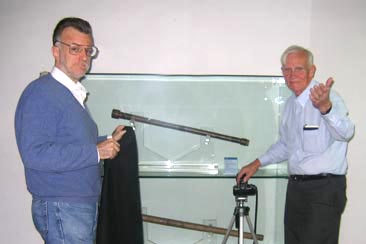
Dr. Strano IMSS who was a rich
source of technical information & Jim in front of the case
displaying two Galilean telescopes that were built within the year
of his great discoveries, the moons of Jupiter and the craters and
mountains of our Moon. |
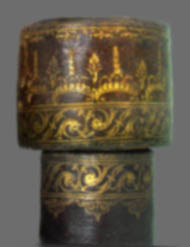
The objective end of the famous
Number 2 telescope with its beautiful art work. |
|
|

Photo by Jim & Rhoda Morris taken at the set of The
TV special Brilliant Minds |

Garnering the measurements |
|
A trip to IMSS Florence Italy to take
pictures, get pictures, and measurements of the
original. There is very good data in the literature on
the optical performance the Galileo telescopes at the IMSS
in Florence Italy. However there was ambiguity in the
literature available to us on the mechanical and decorative
aspects of the telescope. This made it necessary and worth a
visit to the original instruments to measure and photograph
it. The trip was very valuable. It helped clear up the
uncertainties making it possible to produce a replica worthy
of exhibit in the new Griffith Observatory Museum.
We were concerned about the
dimensions of the various components
specific construction details
materials used, and
exact nature of the gilded
decorations
2.General results of the trip
Rhoda and I cannot thank the staff of the IMSS and
Griffith enough in helping to make the visit both productive and a
pleasant experience. This wonderful museum displays important
instruments of science which are also beautiful works of art. It is
a must see on a trip to Italy.
We visited the telescope on three days. The staff were very helpful,
professional, and kind. We had fruitful technical discussions, made
critical measurements, and took photographs which enables us to make
a significantly more accurate reproduction of this famous telescope
.
The excellent photographs taken before and after a
recent restoration of the scope are a kin to a break through
letting one see the essential details of the rarely viewed insides
of the telescope thus giving us the intricacies of the construction
techniques used. These data are indispensable for making a replica,
which we are doing, that is worthy of the Griffith Observatory. They
are also useful to study the building skills and practices available
to Galileo, his associates and assistances in their engineering and
scientific work. The construction is unique and far ahead of its
time. It probably has a lot to do with the telescope surviving to
this century in as good a mechanical condition that it has. It uses
a technique that show the advanced understanding of composite
construction lending itself to mass production that has a strength
to weight ratio the envy of builders to day. Last but not least it
has good mechanical stability resisting the normal warping of the
wooden parts. Reference 1
Below are the IMSS staff that were so helpful to Jim & Rhoda on
the visit to the Galileo Telescopes and his Finger.
|

Franca Principe IMSS who took the excellent
photographs before and after the recent restoration. |

Karen Tomashavsky IMSS who helped in so many
ways coordinating our visit and giving a wonderful tour of
the exhibits. |

Sabina Bernacchini IMSS who helped make
available and processed the many request for the
photography. |
|

Replica of Galileo's Telescope for Griffith Observatory
Picture taken
from Friends of the Observatory brochure Tel 818 846 3686
|
Galileo's Telescope Gathering the size, method of
construction, and the decoration data.
|
3.The tools and methods
we took with and used for
taking our measurements and photos during our visit.
|
|

We built up a portable measurement stand using a modified
short focus telescope with cross hairs and a 4 foot scale to measure the
dimensions of the telescope from outside of the case. This device had a
reading precision of 1/5 mm. but due to the distortion of the roundness
of Galileo scope the diameter measurements had less accuracy. We
confirmed the outside measurements of the lens holders but found a
meaningful difference, in the telescope overall length as reported in
the Catalogue of Early Telescopes by A. Van Helden . The
significance of this difference is discussed in the "Optics" section
below. |

Substituting a camera for the telescope, we took close up
photos along the telescope body, but for the most part we took free hand
shots. We used two 35 mm film cameras with macro lenses and a digital
camera capable of a spatial resolution of 2592 X 1944 pixels to record
the gold and decorative art and make relative size measurements. We focused at two distances and several exposure levels. . We did not
have visible access to the back or bottom of the scope. |
|
The cross section
measurements of IMSS 2428
no correction for barrel
distortion
 |
|
Above is one of a number of examples of a unique
technique to enhance by photographic
means the relative measurements of the dimensions of the
telescope. The bottom photo is from IMSS of just the barrel.
We enhanced the cross sectional shape of this photo by
magnifying the diameter ten times the length. giving the fat
photo shown above. We also contrasted the image to bring out
the surface irregularities. It is more than
interesting how much more information of the telescope
shape is demonstrated through this process. Further,
by normalizing the photo and making
rather small corrections for our camera to our
measurements we get detailed quantitative
specifications for the dimensions of the telescopes.
Throughout the life of the telescope it has been flattened
in several places along its length probably combining these
data with information from photos of the top and
side gives a good approximation of is out of
roundness.
Combining the data we get a shape of two cones..
One starting from the eyepiece at 36mm dia. growing
linearly to 37 mm 150 mm from the objective end. A second
stronger cone starting at 37mm and growing to 47 mm. We have
encouraged the IMSS at their next opportunity to
measure the perimeter along the length of the telescope
rather than the radius. Thus getting of the out of
roundness difficulty. as will be discussed further on in
this site we measure n over length of 935mm rather
than the 980 mm reported on IMSS's web site. This has
also been reported to IMSS.
|
The
video.
below
shows the original telescopes in their case at IMSS along with one of our
setups for taking the overall dimensions and views we had of the telescope while we were taking our
measurements and photos. Click twice on
the play button below to see the streaming video.
|
Studying Galileo's Telescope in detail disclosed a unique
resin
composite construction.
It is not made of cardboard and paper as is often reported in the
literature This discovery
gave us the opportunity to study the methods and philosophy of
construction available to and generated by Galileo, his associates, and
assistants in their scientific and engineering work. This work has
raised some interesting academic and replica questions. 1.Was it
designed for "mass production" by non skilled labors? 2, was the
eyepiece lens the only part replace or was the lens holder also changed?
Studying the original in some detail has helped us in our mission to
construct a much more faithful reproduction inside and out of this
famous Galileo telescope for the Griffith Observatory. |
4.Construction
Details of Galileo's Telescope Tube and Lens Holders.
New data, choice of cutting strips, and importance of keeping them
in order. Tests of hide glue gives good filling characteristics and
has adequate strength.
As mentioned earlier we
were very fortunate in addition to our measurements and photographs
of this beautiful Galilean telescope to also have access to
excellent pictures taken before and after a recent restoration.
These pictures showed that the internal construction of the telescope
is not of cardboard and paper but of wood and in a most novel way.
This opened to us a very rare opportunity of making a very fine
replica in the most complete and accurate detail even to the
interior. This accuracy of course helps to show the
inventiveness and creativity of how scientist worked in 1600. It
shows along with its history the on going issues and struggle of the
basic research scientist trying to get support for their research
and acceptance of its results. This telescope and its history shows
----Not only the technical aspects of science ---- but the politics
of funding for basic research work, of the struggles in convincing
others to see the world more clearly from a scientific measurement
point of view.
This telescope served as a political tool as well as a discovery
tool. It was designed to impress people not of science but of power and wealth by the richness of its decorative appearance. it was also
preformed well, 20 power, to show them his discoveries. The data we collected were vital in
making a truly faithful replication of both inside and the outside
of this remarkable telescope. Many if not all replicas of this
telescope in the past have not had this opportunity or not felt it
worth while to go beyond the use of cardboard, plastic or metal
tubes and turned solid wood lens holders none of which were used in
the original instrument. Some have had to replicate the telescopes
without accurate data thus included in some cases serious errors in
their replication. We believe that this is unfortunate and
scales down the broadness and richness of what is to be learned from this
telescope. We feel, perhaps unfairly, that the lack of detail
and authenticity only increases the myopic view for some of
what science is all about.
Below we show you the detail
of the
very elegant mode of construction and the amount of detailed work
that was required to make it.*
|
|

Figure 1 One end of the tube of the
telescope Photo courtesy IMSS |

Figure 2 One of the lens holder
Before Restoration Photo courtesy IMSS |
Comments about the construction.
From a casual point of view the construction
technique is novel to say the least, to some it looks like a poor
design. See figure 3.Barrel like tube construction requires the
edges of the staves to be chamfered butting up to each other if it
is to have radial strength . Without careful attention to these gaps
it weakens the radial strength of the tube and will collapse on its
self See in figure 4.
All these issues disappear when one notes that the builder used a
resin glue, which had to be liberally applied layer by layer soaking
into all the cracks and filling all the gaps. This is a method that
we today call
a resin composite
construction. It consists of bonding all of the materials and parts
of the telescope together with a resin. The resulting structure has
physical characteristics superior to the components by themselves.
Ref. 1
|

Sticking the sticks together. |
|
|

Figure 3 shows how the tubes were built It was a
construction that was used on both the telescope tube and the lens
holders, the latter having upwards 2 to 5 layers until the tube were the
right size and strength.
We built a small section using this construction technique to
demonstrate how it might be made and to test its strengths and weakness.
for the replica.
It's a strake-style construction comprised of a number of strips of wood
fixed on a thin flexible backing and rolled into a tube. It's easy to
build but note the gaps on the outside. The tube strength depends
markedly on the treatment of these gaps. Without a filler between them
the junctions would collapse on themselves with very little pressure .
We show this in figure 4. |
 Figure 4 Figure 4
The telescopes strength--
In preparing the first layer for the second, resin
glue is put on the outer surface of the 1st. thus fills its gaps.
Preparing the second surface for the third fills the second layer gaps,
and so on to the final step. At this point one has saturated the whole
tube layer by layer generating a
resin composite construction which is light
and strong using a minimum of simple tools. A process that lends its
self to mass production. |
|
|

Figure 4A, Simple construction steps which do not require a lathe. Note
the tube can be squished as in 4C, a" feature" making the joint gluing
easier. It only requires a simple square not cylindrical mandrel.
-
Strips of wood are cut from a single sheet. These cuts
don't have to made with precision and in fact are rarely straight when
done by hand. But when the pieces are kept in sequence the gaps between
them maintain a uniform width. See inset photo in A.
-
A, Strips of wood glued to backing
-
B, Strips bent in to tube form
-
C, Tube is clamped while glue is setting
-
D, Tube ready for next layer
|
|

Figure 5 Second layer
A test section showing the novel construction used in
the number 2 Galilean Telescope. Today we call
this a
resin composite construction. Its light, strong and
cheap. It resist a 100 lbs crushing force. |
|
Visit
to Adler Planetarium The trip to study the Italian Cipriani Replica
at the Adler planetarium Chicago was a very valuable visit and the Adler
staff was very helpful. We gathered new data, 50 digital images and 33
35 mm color negative along with numerous measurements of the telescope.
We also got very important data on the telescoping lens holders. |
|
Below are the Adler Planetarium staff that were
so helpful to Jim on the visit to the Cipriani
replica of Galileo's # 1 & #2 telescopes in
Chicago Ill . Their
professional help and patience helped significantly to
our making the replication of the orginal
Galileo telescopes more precise than has been done before.
_Thank you again Jim & Rhoda
Morris |
|
|
|
|
|
Michelle Nichols,
Master Educator Adler Planetarium & Astronomy Museum |

The beautiful Cipriani replica of
Galileo's # 1 telescope being treated with the care and
attention it deserves. |
Devon L. Pyle-Vowles
Collections Manager Adler Planetarium & Astronomy Museum |
|
Important issues comparing the
original Galileo with the Adler Cipriani replica telescope
Deciding on sliding tubes for the lens Both the Cipriani
replica telescopes have sliding tubes carrying both the eyepiece
and objective that slip into the main telescope body.
The question is did the original have them too? This was not
completely resolved with our visit to IMSS. From the literature we
found extra decorated space between the objective housing and
the end of the barrel. This appears in figure 9 below, suggests
that at least there was a sliding lens holder for the objective
which could have been used for extending it out for longer focal length objectives. Using this objective adjustable feature for focusing would have
been troublesome it is too far to reach. Therefore an adjustment also at the
eyepiece end would also have been sensible. essentially The photos of the original telescope during
restoration suggests that the protruding staves were part of the
sliding mechanism at both ends and not simple cardboard tubes as has
been suggested. It appears that the tubular stave construction was
used throughout . Also the 1704 inventory
listed the telescope as coming in two pieces for lengthening it. We
still wonder about the little Marble paper covered eyepiece holder
which would make three length changing elements even though it has
very little adjustment, perhaps 8 or so millimeters hardly the 7 cm.
needed to focus on objects 30 meters away. We believe that
there is enough circumstantial evidence suggesting that the Florence
telescope has these telescoping lens sections as well, but they are
stuck inside the telescope IMSS photos show the staves sticking
out from ends of the main tube. We therefore include
telescoping tubes in our replica.
IMSS photos of the staves sticking out of the body of original
telescope gave us a good measurement for the outer diameter of the
sliding tubes but not their length
The length of the objective tube we were able to establish to an accuracy of
about 1 centimeter. To get this length we used our measurements of the expanded portion of
the main telescope tube at the objective end which is expanded down the main barrel to accommodate the sliding tube.
For the
eyepiece tube we chose to use the length of 27 cm as was used in Cipriani replica at the Adler Planetarium . If Information surfaces to the contrary it can be cut back to 12
cm where the decorations on this tube start.
We also looked into the information to be
gained for an estimate of sliding tube dimensions from the
Cipriani replicas. We looked into two of his replicas one at the
Science Museum south Kensington London reported by Baxandall
in our ref 1. The second from our measurements of a Cipriani replica at Alders Planetarium
Baxandall in his drawings do not agree with
each other to within 10% nor do they replicate the
outer dimensions of the original where the diameters are different
as much as 10% which is a factor of 10 greater than our goal
for accuracy.
Also strangely the Cipriani telescope does not have a red marble
paper covered eyepiece which would have been altogether out of stile
with the rest of the original instrument but has a decorated disk
framing the eyepiece down in the container similar to the objective.
A detailed examination of his replicas shows a number of strong
differences between them and the orginal ranging from
dimensional differences to art work differences It almost like
Cipriani tried to incorporate improvements and changes to make it
easier to build.
We also took detailed photos of the decorations covering the
telescoping sections of the Adler instrument. They are a combinations of the deco's on the out side
but patterned and scaled differently. We did not incorporate any of
Cipriani inconsistencies in dimensions and We chose not
to make them out of
cardboard as Baxandall reports that Cipriani did for the replica for
the science museum London but
stayed with the stave construction which is consistent with
the rest of the original telescope.
The visit Adler to get detailed pictures and measurement of the art
deco on their number 2 replica was also very valuable. Although
there are some issues in scaling and details in shape of the
Cipriani instrument that are not true to the original telescope we
were able to use then to get a better prospective of the finer detail
always referring back to the original to make the final decision for
this project.
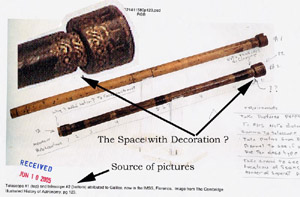 |
Figure 9 Image from The Cambridge Illustrated
History of Astronomy pg 123 |
The Telescope Optics
This section presents the details and a
discussion of the optics
that are presently in the Galileo IMSS 2428 telescope and the optics
we used in replicating this telescope.
Below is a schematic, not to scale, for
a visual aid to help our understanding of what the eyepiece and objective
physically look like and an optical ray diagram of a Galilean type
telescope The path of the rays of light through the
lens was reproduced from a 1860 text on Natural Philosophy.
|
Click Here
Technical uncertainties in the optics of
Galileo's telescopes

Photo by Jim & Rhoda Morris taken for The TV special Brilliant Minds
|
|
Note that both lenses are double
convex or double concave in this 1860 drawing. We have found this to
be
true for drawings from at least 1800 up to today. See
Galileo-Telescope-Anomalies-optics This is not at all
what Galileo had a mix in his telescope. He had both plano concave and
plano convex lenses. Is this important? Absolutely.
This is a good example of a technical error in reporting on
Galileo's choice of the lenses which are the telescope. Further it
is an error in descriptions on one of the
most historically famous, international
telescopes. An error that has stayed with us for hundreds of years
replicating its self over and over again..
Neglected errors of this sort is not
good science or reporting of science. It distort our
view of what Galileo and the early lens makers knew about optics in
the1600's and the issues of who invented what and when. From
the professional literature if true Galileo did not invent the
telescope but did invent one with higher power using lenses
with one of the surfaces of each lens with such little curve in it
that one can say that it was flat. He also used a negative lens as
the eyepiece. The use of double curved lenses and more than
two lenses are other inventions and most likely other inventers.
Galileo's telescopes are
extremely important symbols of what basic research is really about.
No
Words are Powerful Enough To Express
The Importance Of Basic
Scientific Research
so we start off this section of optics with an example of the
importance of accuracy in our choice of lenses. When we look at
Galileo and through his telescope and use him and his telescopes as
symbols of what science is all about here is example of distortions
of science that misleads us about science.
There is no room for sloppiness in science or reporting about
science. The most essential tool of scientific research
is "accuracy" in the treatment and presentation of data, data from which we development conclusions. When the scientific world
present (publishes) their data publicly or in private communications
More important than the data itself is the qualification of the data.
How accurate is it and how was it taken etc.? Using this tool is one of the
reason science has been so successful. Each piece of data lays the
ground work for next collection of data etc. etc.... |
|
Our choice of lenses;
One of the many departures often made in
building replicas of Galileo telescope is to compromise in
the focal lengths of the lenses. Galileo's objective of the
#IMSS 2428 telescope has been reported to be 98 cm .or
95.6 cm. requiring nonstandard lengths therefore costing
hundreds of dollars compared with the much cheaper standard
focal length of one diopter or 100 cm. If one uses the
cheaper lens this unfortunately leads to a domino
affect of compromise. It changes the over all length of the
telescope by almost an inch which in turn alters the
location of the gilt decorations on the body of the
telescope and it also changes the optical power. Where does
it stop? If we use the powerful story of the Galileo
telescopes to teach people about how science works. how can
our audience
trust us if we don't even use the
first basic rule of science, accurate repeatable testable
measurements of time length and mass in building this
symbolic Telescope?
Our finial choice for the lenses and
why. Conflict in the modern measurements of the
exiting lenses at IMSS
The objective: see our references
For the moment we have chosen to use the 1992 Greco etal. ref-----980mm.
f.l. measurements rather than the
1923 Ronchi's etal. 956mm focal length for the objective. There are
3 rational
for this decision.
1st The over all length of the body of the telescope is too long to focus the telescope at
infinity with an eyepiece of 5 cm focal length. The eyepiece
would have to have a considerably shorter focal length resulting in powers greater than 20.(look
further on in our web site at how to determine the over all
length)
2nd If one takes The Refractive index of
Ronchi's calculation and his measured radius of curvature
one calculates the focal length to be 980mm..rather
than 956mm. An inconsistency within the data is suggested?
3 Greco etal. must have known of the difference of his and Ronchi's measurements
because he references Ronchi therefore we feel that it can be safely assume he would have checked and rechecked his data to be sure
his measurements were correct.
4.On the other hand if Ronchi's 956 is correct the
optical length would be 908 with a - 48 eyepiece.
If we
leave the extra eyepiece off and transfer the lens into the
holder subtract the over hangs the telescope length would be
891mm. This raise the question if Ronchi
's 956 mm f.l. is right this means that the extra holder
which does even have the same artistic style could be
abandoned. We believe that there should be another
independent measurement of the f.l. of the objective should
be made. In any case our telescopes can work with either.
The Eyepiece.
This lens is not the original so we have to make an
independent decision. based on measurement and experience.
and our effort to reproduce it as it was originally.
There is a fair agreement that the original eyepiece has
been misplaced. so
We have chosen to use a plano concave eyepiece instead of the biconcave lens as is presently
used in
the current telescope but use the same focal length based on
our arguments of telescope length and our measurements of it
described earlier..
We use three rational for this decision.
1st The other longer telescope IMSS 2427 uses a plano
convex lens.
2nd there a fair consensus that Galileo made
a number of his own lenses so it was simpler and faster for Galileo to make a plano-concave lens.
For the most part he only had to grind and finish one rather
two surfaces. Grinding is faster than polishing and he
would have only one surface to polish..
3rd There are significantly fewer errors going this
way, Errors like getting the two radii lined up etc.
which In our opinion Galileo would have certainly known
about from his experiments. never the less if our
choice has been wrong
its simple to change the lenses. |
|
|
Overall length of the telescope is determined by the optics
There is an Inconsistency in the length of the IMSS
#2428 telescope. It is reported that the length of the telescope is
the same as the focal length of the objective. This does not leave
room for the eyepiece when focused on distant objects.
Total length of a telescope focused for infinity
= Focal length objective + Focal length eyepiece + lens holder over
hang .
NOTE the overall length will vary
depending how far the lens have been extended for focusing. It
appears that
both the object and the eyepiece can be used to extend or
reduce the optical length for focusing. (see figure 9) this maybe
about 10 cm plus 20 cm for both.
The present telescope at IMSS is reported to have an objective that is plano convex
with a focal length of 980 mm and a diameter of 37mm. The eyepiece
is a biconcave with a focal length of -47.5mm and a diameter of
22mm.
The optical length of the telescope for an object at infinity would
be the sum of the focal lengths, namely
(980 -47.5) =
932.5 mm. add 21 mm for the over hang in the holders.
This gives calculated figure for the over all length of the IMSS
telescope closed of 953.5 mm. Using Ronchi' focal
length for the objective (956mm) for the objective 47.5 for the
eyepiece plus a 21 mm over hang gives a total length of 929.5mm We
have measured the scope at IMSS, using three methods. One of the
methods using with the apparatus described above, plus a video
showing the operation to be 935
mm + or - 2mm which depends on the
position of the eyepiece and objective tube. It looked to be closed
when we measured it. From 6 measurements with two types of apparatus
we measure the body of the telescope to be
836 mm- or + 2 mm.
Our best guess at presents' that it can open 20
cm more giving a length of 1165mm. for focusing on nearby objects.
The catalog of early telescopes
by Alert Van Helden, page 30 lists the telescope's overall length as
980 mm., which is off by about 35 mm. or nearly 1 3/8 of an inch
different. according to our measurements. We have spoken to
Van Helden 2007 about
this discrepancy and he believes that the over all length is not
980mm.
The objective has a focal length of 980 mm lens which is not a
standard production item and therefore an expensive
piece to purchase from out side sources. In stead we purchased four 1000mm fl. lenses and shortened them to the to 980mm fl . .
We tested the process with plane glass blanks and found that we
can make changes in the shape at a rate acceptable to changing the
focal length of our 1000 mm. lenses to 980 mm. See photos below
General details of the
equipment assembled to shorten the 1000 mm focal length lens to 980
mm.
We have tested the process with plane glass blanks and found that we
can make changes in the shape at a rate acceptable to changing the
focal length of our 1000 mm. lenses to 980 mm. See photos below
Here is a web site
that explains how the lens testing method that we are using works

Optical diagram of lens testing apparatus |
 |
|

Close up of the lens holder and optical flat |

We tested the polishing machine using a 2 inch diameter 1/8"
thick plane glass blank. with 4 minutes of polishing we took
off about 46.4 millionths of an inch and converted it to a
convex surface. The photo above shows the interferogram of
our glass blank with the interference lines use to get this
measurement. It's going in the right direction with
reasonable speed. All we have to do is get good spherical
surface and not overshoot the focal length of 980 mm. |

close up of the light source and the
knife edge |
Lens Grinding/Polishing
Machine

Lens polishing /grinding
machine that we've put together for this project.
We are going
to use it in an attempt to polish down the focal length of the
1000mm lenses to 980 mm.
|
5. The all important art
work
This telescope was not destined to go to a colleague but
to a customer of high rank and station and is an important part of
the Galileo story, It is a symbol of his marketing and entrepreneurship.
While there
is no strong evidence that Galileo would have done the gold leather
stamping himself his the choice of the artisan was no less critical
to him then the rest of the detail of producing this telescope,
beauty and flattery had to be part of his skill set. So as it is
today. One stopping to visit and admire this telescope
deserves no less than to be treated as one of high rank and
station if we are to gain their support of basic scientific
research.
Developing the art work from photos contains many
complex issues. It has been a slow and exacting process extracting
the shape and detail of each of the deco elements from our high
resolution photos which show each dent, scratch, warp and hand made
irregularity. Rhoda and I have spent hundreds of pleasant hours
deciphering and unfolded the detail to get as close a match to the
orginal hot stamp as possible. the outcome of this work are more
than 20 hot die.
Below is a fairly detailed discussion of
the methods we have used to select build up, and clean up, the photo
images for the art work we have been using to make the black on
white figures to engrave the hot stamps that are used to make the
gold foil impression on the leather of the telescope. Details like
the black and white drawings also have to take into account the
impression process leaves a figure that is somewhat different than
the engraving on the stamp. p.s. (Even the
description of how it is done is long and tedious. But the results
have been satisfying).
To make a faithful replication of the gold art work
on the telescope one needs a lot of high resolution photos of the
telescope showing this detail.( our visits to Florence and Chicago
produced them and, the wonderful here-to unnoticed structural
features of the telescope). Even so it takes some time to get a
feeling for what the original figure looks like because each
component although made with the same stamp experiences a different
history of application and ware and tear.
More General Background Information
About the Art Work Decorations are
applied with a "heated" stamp pressed on a piece of
treated gold foil laid on the surface of the
leather. Up to 20 or so pounds of pressure is
applied to the leather embossing the figure and
gluing a gold film to the inside of the impression .
The stamps we are having made are out of Magnesium
plate by printed circuit board type of technology
using a photo resist coating on the magnesium. We
supply the black on white pattern for the figure to
be etched on the medal to the vender who makes a
photo negative See figures 6A and 6 B. these are
used is to exposed the image on the plate. The
unwanted portions are etched away leaving a stamp
which is cut away from the plate and then mounted on
a handle.
|
|
6A &
7A Below are photos of the original telescope at IMSS and a replica
displayed in the Adler planetarium Chicago Ill. Florence,
Italy c 1930. We have modified the photos of the replica
substantially to make the decorations stand out more clearly. This
has altered the colors from their true appearance. One can see
substantial differences between the two scopes in the deco details
as well as the eyepiece which does not show the small sliding focus
lens holder. |
|
6.An example of generating the
data to make a stamp for Gold embossing the Decorations. |

Alder Replica |

First Guess at Shape of Die. Not good enough. By the way this is
reported to be a dolphin. |

Original Telescope |
Even the beautiful photo
below shows loss of data in the flowers on the
top and one of the feet below. In this case we
have had to take a parts of one image and add it
to another to get the lost detail.
there has been a loss of symmetry in the two
branches because of the way that the craftsman
applied the hot stamp.
So all of the individual deco's are a composite
of several photos |
|
With our discovery of the c 1930
Guilio Cipriani, replica at the Adler planetarium presumably made
from the original number 2 in Italy we found substantial difference
between the original and the Adler. But the Adler was important
because of its finer detail than what is left of the original. Thus
we were fortunate to obtain more detailed photos and provenance.
before we committed to an order for the stamps. This has turned out
to be very important to the project
.
To reiterate, there are a number of reasons for the differences of
the components of the decorations.
1, damage to the figure, scratches or digs
2, different application pressure
3, different orientation by the artist applying the figure.
4, previous restoration, stretching of the leather, etc.
5, the selection of the particular design component
The above black and white figure so far is a composite of the best
images of the original telescope. The Adler
Guilio Cipriani, replica has given us some added detail for a
better replica. |
|
One of the tricky things about supplying
the art work
is that the impressions on the leather from
the hot stamp are not exactly the same as the black and
white art work supplied! The gold embossed images
are broader and less sharp than the stamp. The deeper
the stamp impression the broader the outline of the
image. Obviously the impression has walls which are
coated with the gold leaf. The walls are not truly
vertical but slant, the slant making the image broader
to the observer. The slope depends on the physical
characteristics of the leather and the depth of the
impression. The softer the interior and the harder the
surface of the leather the shallower the slope of the
walls and the broader the art work.
 , ,
| The comparison above of the
variations of a single component in the art work
of Galileo's telescope versus a number of
die's and a 1920's replica by
Cipriani shows how different the outcome can be.
We made several sets of stamps until we were
satisfied by the tests described below.
Extracting data from the figures on the
orginal to obtain a suitable reproduction is a
challenge.
Below we take you through
several steps in. the process including the
creation of a guide jig for applying the
stamp that would allow the natural operator
randomness of placing the stamp on the leather. |

Art work on monitor is
from Cipriani replica The art work on the telescope
has at least 20 distinct components a few can be
combined to perhaps 15 individual stamps. To save money
on the project we have put about 20 figures on a single
sheet of art work thus making a one step operation,
producing one large plate of Magnesium full of dies
which reduces the cost of put out sourcing in this step
to one tenth. The photos shown below is a single piece
test of the operation less the trimming of the die
around the working face .

Again Art work on monitor is from Cipriani
The deco components are of course on a cylindrical surface and the
camera records them on a flat surface distorting in a cylindrical
sense the figure you are trying to replicate. The technique we
developed to unfold this image distortion incorporated both
mathematical and non-mathematical methods. We printed out the
best estimate of the components of decos bands and fixed them
to a solid wood mockup of the scope. Then took photos of our work
and superimposed them, using Adobe Photoshop, on to our photos of
the original. This technique gave us a very clear view of the over
all comparison of the replication. It gave us at a single glance a
highlighted view of the differences especially the ones that
needed correction. It also clearly showed the precision of the
orginal artist making the gold imposed stampings. The authors also
made cylinders of each ring to use in a hot stamping jig discussed
below. Last but not least the mockup can be handled roughly giving
the craftsman a real time three dimensional over view a guide of the
location, sequence, and arrangement that the stamps that have to be
applied to the leather. This method helps us make a truly unique and
precise replica.
|
|
The plate of hot stamp dies
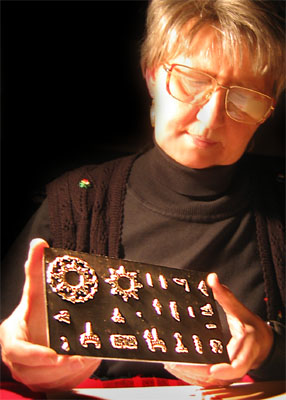
- The steps to make the die are
- cut the die from the plate
- hand trim it
- mount it with a stub handle to
attach to a the working handle.
Figure 7A the hot stamp in the rough cut from
a larger plate.  |
Applying The Gold
Embossing
The
next to the final step is hot stamping the gold embossed
decorations. The hot stamping was quite a challenge. There is
a 60 sec video of it happening. The telescope
has a number cylindrical diameters, conical sections including
telescoping sections. For all of its simplicity its a complicated
little beast nothing really square to use as a reference point .
|
Our
universal hot stamping jig.
After a number of practice sessions by us and professional craftsmen
it was clear that one could not get sufficient precision locating
all of the deco components by hand with out the aid of a series of
positioning jigs to help locate the die . Rather than making individual jigs we decided to design and make a universal jig which
is shown in the photos. Our hot stamping jig is designed to help the
craftsman navigate through the collage of better than a four hundred
impressions. This jig is essentially a self registering "T" square
that indicates to the operator what part of the decoration is being
worked on. The telescope lies in a "V" trough at the base of the
jig. In this photo we have placed a test piece in its place and are
running through a trial stamping to check the procedure. Our
universal hot stamping jig is a series of locating translational,
rotational and centering devices fitted together on to a single
base. It helps free up the operators hands to concentrate on the
stamping process. For example the wheel C in figure 4 in the photo
below carries a sample of figures to be stamped on a given band.
This is used to coordinate the application of the individual
impressions. It is connected to the telescope through a threaded rod
.We have added self centering judicial line for the rotational
orientation. It hangs on the bottom of the vertical metal 18 inch
tall strip that can be seen on the right of figure 1 . Close up
shots of most of these items are shown in the |

figure 1 |
|

figure
2
The telescopes is covered with leather and is in the
jig to go through the gold embossing steps. The operator uses this
self orienting "T" square to locate the hot s stamp.
As out lined above there a sizeable number of
discreet patterns most of them interlock with their neighbors. |
 figure
3 figure
3
Its important to note that the
principal role of this universal jig is to locate a starting
point for one corner of each die. It is important not to acquire a machine made like appearance to the
embossing. It is vital to retain all the uncertain hand
variables that a skilled craftsman has and that is so
clearly visible on the orginal telescope. So except for the first
contact point the rest the impression has been left up to the
operator which includes rotation, and variable hand pressure. |
|

The cylinder is a layout guide attached to the telescope thru a
threaded rod and rotates in synchronization with
the scope. It carries a full scale picture of the details of each
decoration band. The fiducial line aids the operator in applying the
hot stamp die to the leather in the appropriate location.
figure
4 |

Finally a skilled craftsman applying the hot stamped decorations with the
aid of our self orienting "T" square. The telescope is nearing
completion. The final step is a slight darkening step to the leather
to reach the correct color scheme of the original when it was new as
described by Van Helden .
figure 5 |
Copied from WokipediA The Free
Encyclopedia
With the loss of many of
his defenders in Rome because of
Dialogue Concerning the Two Chief World
Systems, Galileo was ordered to
stand trial on suspicion of heresy in
1633. The sentence of the Inquisition
was in three essential parts:
- Galileo was
required to
recant his heliocentric ideas,
which were condemned as "formally
heretical";.
- He was ordered
imprisoned; the sentence was later
commuted to house arrest.
- His offending
Dialogue was banned; and in an
action not announced at the trial,
publication of any of his works was
forbidden, including any he might
write in the future.
After a period with
the friendly
Ascanio Piccolomini (the Archbishop
of
Siena), Galileo was allowed to
return to his villa at
Arcetri near Florence, where he
spent the remainder of his life under
house arrest. It was while Galileo was
under house arrest when he dedicated his
time to one of his finest works,
Two New Sciences. This book has
received high praise from both
Sir Isaac Newton and
Albert Einstein. As a result of this
work, Galileo is often called, the
"father of modern physics"
It sure took some time to come
around to Galileo's discoveries
Galileo was reburied
on sacred ground at Santa Croce in
1737. He was formally rehabilitated
in
1741, when
Pope Benedict XIV authorized the
publication of Galileo's complete
scientific works (a censored edition had
been published in
1718), and in
1758 the general prohibition against
heliocentrism was removed from the
Index Librorum Prohibitorum. On
31 October
1992,
Pope John Paul II expressed regret
for how the Galileo affair was handled,
as the result of a study conducted by
the Pontifical Council for Culture.
|
|
![]()
A 2 minute unedited video of the stamping operation. Rhoda is using an enlarged photograph,
one of dozens of the original telescope we took along with measurements at the IMSS in
Florence Italy, to help guide this work. To left is a hot plate to heat the die. To its
right is a water soaked pad to aid in setting its temperature. One can see the placement of
the gold foil under the "T" square. and the embossing process. The telescope is indexed by
hand to next location and the process is repeated There are over 400 impressions.
We have been asked why not speed up this operation by any one of a dozen ways saving time
and money. We considered most of them but in the end the most visible thing about the
telescope, these decoration, in our view, would have been seriously compromised for museum
use .
|

THESE LITTLE GUYS NEED YOUR HELP FOR THEIR FUTURE. SUPPORT BASIC RESEARCH IN THE SCIENCES.
BY CALLING AND WRITING YOUR CONGRESSPERSON TODAY.
|
Galileo's
Telescopes and Pieces of Telescopes. We are told ref 1a, 2a that
Galileo built a number, maybe as many as 60 telescopes and lens
sets, in the process of doing and reporting his famous research
work, Some believe that only the objective lens of "the data scopes"
is left and that's broken into several pieces.
Not all of the telescopes he built or had built
were used for research data purposes. But there are two telescopes
left from this era which are very important to us today, especially
a beautiful leather covered scope and a companion for comparison
demonstrates what a basic research scientist has to go through to
get funding for his work. A very serious problem that still exist
today. There are two telescopes that are assigned to Galileo that have
survived, one
the development telescope
IMSS 2427 roughly built paper covered working telescope,
It
emphasizes most of the
technical details of probably one of the most historically
significant, from a technical view point, telescope in the world.
and
the other
IMSS 2428. the most famous for its
beauty, the leather covered presentation telescope,
both are on display at the IMSS in
Florence Italy. The original leather telescope that we have
replicated could become as important, in later years, as the
pure research telescopes. There are at least two compelling reasons
that come to mind for this.
The first reason is because
this telescope, exists because it was beautifully built. It used an
ingenious wood stave design that allowed the various diameters of
the scope to be easily fabricated from the same flexible
construction material It was beautifully covered with leather of
different colors and embossed with myriad patterns of elegant gold
tooling. Since it was a piece of art it undoubtedly was treated with
greater consideration which accounts for its long lifetime. So in a
sense when you visits the little leather telescope or its replica be
assured that Galileo intended it as a work of beautiful art for your
deserving eyes and that he is personally offering it to you for your
inspection.
The second reason for its importance is that this
piece of art served as a presentation instrument for Galileo when
he was announcing his extraordinary findings to those of wealth and
power that controlled the financing of his scientific work. He used
it as a communicating tool, a grand gift to his sponsor. It
still servers in this role today.
It is a living demonstration
that scientists even with their current track record still
have to communicate across many borders, perhaps even gild the Lilly
as Galileo did, to obtain support for their basic research work.
Scientists still have to struggle for endorsements of their studies
from the government and public on technically
matters of great concern, such as environmental research, stem cell
research, etc. It reminds us that science and religion can still be
confrontational and that the military is still one of the strongest
supporters of science.
But its greatest value is
that it has drawn people together to marvel at the sites to be seen
in the sky through two little pieces of glass. There is a macro
world out there that is still to be discovered and understood. So
this famous little leather telescope, and hopefully also
its replica, is still being pressed into the same service today as
it was originally by Galileo in 1600. It helps people gain more
enjoyment and a better understanding of the universe we share with
others. |
Appendix
Here is a url for a few more details of the trip:
photos of the telescope, more of the IMSS staff,
the museum
and the country side.
|
* Why
is it important to make a museum grade replica
in
its most complete form inside and out? Why spend hundreds of hours of research and building such a replica?
1st, One can appreciate the telescope more because it is not an almost replica, only skin deep, made
out of plastic or cardboard, with an almost correct optics
and dimensions. It serves as a more honest display for the
public to visit and study.
2nd, Its a tactile time capsule. It is a more complete record than a digital or paper one It is what the original telescope is today. with all of its
modification over the past 400 years. Further, if for some
catastrophic reason the original is lost there is at least a precise
replica to help keep the record straight as to what it was like in
2006.
3rd, Its has a greater research and
teaching value. The rather unique method in construction of this
telescope helps one to judge and understand the mechanical aptitudes
of Galileo and his associates.
4th, It helps one get a clearer picture of the early
experimenting in the kinds of materials, tools, and techniques
that had been tried for constructing telescopes
as a commercial opportunity. It demonstrates another first for Galileo. A type of telescope tube construction that was
the forerunner of some of the large polygon wood telescopes. and the
use of resin composite
construction to make telescope tubes and lens holders more rugged
and resistant to the vagaries of moisture and rough handling.
5 fifth, Then there is the poetry part of
life. If one should be the lucky enough to handle and use a
faithfully produced replica one would get the full experience that
Galileo had when he was using the telescope, the same visual and
tactual sensations that Galileo had four hundred years ago. You
would find all the good and not so good design and construction
issues, the cranky limited field of view, the color and other
optical aberration in the image, its firm light weight
constructions. Your experience would be an accurate replication of
Galileo's experience giving one a more emotional appreciation for
Galileo's skill and intuitive nature.
6th, From a practical point
of view it has higher monetary value if the instrument has been
faithfully reproduced.
There is a second question in replication often
brought up for debate.
After spending all the effort
required to produce a museum quality clone inside and out (optics,
supporting structure and decorations) does it make sense to destroy
all this careful work with sand paper, steel wool, dyes, acids, and
alkali solutions in the name of "antiquing" it?
There are many ways of looking at this question. I've chosen four.
1 ,
How would Galileo feel about this? Just put
yourself in Galileo's place . You come back to your laboratory after
having a tasty lunch and you find that one of your technicians has
taken your most beautiful brand new presentation telescope and
worked it over to make it look like it's 400 years old. Would you be
upset or happy because it no longer shows the quality of materials
and craftsmanship you expended?
Would you want to show
this brand new beautiful instrument as a representation
of your work or antique it with sand paper, steel wool,
dyes, acids, and alkali solutions? At any rate it
would not be as disappointing as being put into jail for the rest of your life for interpreting the data from the telescope in a non-Church supported theory.
2, What would you feel about
Galileo's treatment of you? If Galileo were
alive today and came to give you, or show you one of his
telescopes for the purpose of telling you his story or
to convince you to support your local scientist, would
you take him more or less seriously if he presented you
a with sand papered, steel-woolen, dyed, acid and alkali
treated scope or a brand new carefully crafted
instrument?
3,Wouldn't visitors lose a truer
connection between themselves and Galileo? Is it not
better and more impressive to you or your visitors that
when the telescope is presented for your inspection, that you really experience the feeling of what it
must have been like to be there when the telescope was
first introduced: shiny, new, and grandest
in its glory rather than being presented with one that
contained all the wear and tear of a four hundred year
old instrument?
4, What about giving respect and
honor to those who have given us something of value in
the past? Isn't the best way of honoring one of the
finest, most famous, though poorly treated early
experimental scientists by displaying a beautiful
replication of his instrument when it was splendidly new
and young just like Galileo, at the top of his world?
inside an outside. This gives the proud
owner a one upsmanship in something very famous and extraordinarily rare.
jcm/rum |
|
References
Ref 1
The American Heritage Dictionary
1a. Catalogue of Early Telescopes by
Albert Van Helden 1999 Istituto e Museo di Storia
Scienza dell Scienza, Firenzze
2a. Sidereus or The Sidereal
Messenger Galileo Galilei Translated
with introduction, conclusion, and notes by Albert
Van Helden The university of Chicago
Press Chicago and London1989
We thank Paul Valleli
of Amateur Telescope Makers of Boston for discussions on
adjustments of the focal length of the objective,
recommending several source of information and generally
paving a path to many resources including contacting
Peter Abrahams of the Antique Telescope Society who very
kindly supplied the references below. Also the is a
well rounded collection of references and
relevant information pictures plus interesting critiques
maintained by Jim Mosher. Tom Pope both experience
scientist.
1, Baxandall, David.
Replicas of Two Galileo Telescopes.
Transactions
of the
Optical Society 25:3, (January 1924)
141-144. (measurements
Galilean optics)
2
Pettit, Edison. A Telescope of Galileo. Publications
of the
Astronomical
Society of the Pacific
51 (June 1939) 147-150. (#301) (replica
by
Cipriani)
3(Galileo) Barr, E. Scott. Men &
Milestones in Optics, III: Galileo
Galilei.
Applied Optics 3:12 (1964) 1321-1328.
4(Galileo) Drake, Stillman. Galileo Gleanings VI:
Galileo's First
Telescopes at
Padua and
Venice. Isis 50:3 (Sept. 1959) 245-254.
5(Galileo) Drake, Stillman. Galileo's First
Telescopes at Padua
and Venice. Isis
50
(1959) 245-54.
6(Galileo) Greco, Vincenzo, G.
Molesini, & F. Quercioli. Optical
tests of
Galileo's lenses. Nature 358 (July 9, 1992) 101. <&
.pdf>
6a V. Ronchi "Sopra i cannocchiali di Galileo," L
'Universo 4,791-804(1923)
7(Galileo) Greco, Vincenzo et. al.
Telescopes of Galileo. Applied
Optics 32 #31
(Nov. 1993) 6219.
8(Galileo) Miniati, Mara.
Examination of an Antique Telescope.
Nuncius 9:2
(1994) 677-682.
9 (Galileo) Ringwood,
Stephen. A Galilean telescope. Quarterly
Journal
of the
Royal Astronomical Society 35 (1994)
43-50.
10 (Galileo) Sonnefeld, August.
Optical data of Galileo Galilei's
celestial
telescope. Jena Review #6 (1962) 207-212. <.jpg>
11 (Galileo)Westfall, Richard. Science and
Patronage: Galileo and
the Telescope.
Isis
76 (1985) 11-30. <& .pdf,.tif>
12
(Galileo) Zik, Yaakov. Galileo and the Telescope.
Nuncius 14:1
(1999) 31-67.
--------------
13 (Galileo) Dupré, Sven. Galileo, the Telescope,
and the Science
of Optics in the
Sixteenth
Century: A Case Study of Instrumental Practice in
Art
and Science.
PhD Dissertation,
Universiteit Gent, Belgium, 2002. 366pp.
--------
14 (Galileo) Miniati, Mara, et al. Examination of a
terrestrial
telescope with the
signature of
Galileo. Optik 101:3 (Jan. 1996) 140-142.
15
(Galileo) Greco, Vincenzo et. al. Modern Optical
Testing on the
Lenses of
Galileo. pp110-121,
Paolo Mazzoldi, ed.; From Galileo's
Occhialino
to
16 Optoelectronics, conference Padova June
1992; Singapore:
World Scientific, 1993.
17 Sidereus Nuncius
Galileo Galilei Translated by Albert Van Helden1989 Univ
of Chicago. p91
ref replica Hale had made
-
Title: A Telescope of Galileo
Authors:
Pettit, E.
Journal: Publications of the Astronomical
Society of the Pacific, Vol. 51, No. 301, p.147
Bibliographic Code: 1939PASP ..51 .147P
http://articles.adsabs.harvard.edu/cgi-bin/nph-iarticle_query?1939PASP
..51 .147P
When you have time about 45
minutes
Click
here for a video of a talk we gave at
Harvard-Smithsonian Center for Astrophysics (CFA)
about building Galileo's telescopes With
some of the secret we discovered and how Galileo
story fits so well in today's
scientific climate.
It requires real
RealPlayer-----The authors thank
Richard
Amirault
very much for
taking, editing, and posting this video for
all who have a passion for science and very
beautiful high tech kites.
|

The four dimensions of science
Time, length, mass, and trust without them darkness prevails. |
On the bottom of the
tetrahedral is the word trust which is the
foundation that holds it all
together. |
| Thoughts about gaining
a better reputation for the scientific
community The scientific method
is often called upon by those in the trade,
especially teachers, to explain how science
works. "Wikipedia",
to some not the best source in the world but
one that is often used by the public, says that the definition of this
topic has been the subject of intense and recurring
debate throughout the history of science. Maybe this
why Google returns over 12 million
hits on these two words. Many of them
emphasizing more words phenomena,
hypothesis, rationalism, formulating, and peer review.
How often do these words appear in the day
to day conversation of the Grand majority .
Shouldn't we use a common language to
communicate to the grand majority more
understanding about what scientist do in
their every day work?
How can some of the best mind in
the world that have chosen to work in science
developed a cure to this untrue disparaging
reputation Why
haven't they developed a practical solution to
fixing this simple but damaging issue. Even if the
survey is off by a factor of two, how are the
scientist to get better funding and public support
for their discoveries and their research with a
questionable reputation for honesty? The
authors believe that there
is a solution
one that fits most people, both students and
adults, the smart and the not so smart,
those that are not interested and never will
be interested in any scientific
principle or instrument, and those who
resent the intrusion that science and their
proponents makes in their lives.
This solution includes not
just the instrument used in experimental
scientific work. They are an important
component but only half of the
solution. The other half addresses the
overuse or misuse of common
sense in judging how science works. We need
afresh look at the built in human condition
for not lying in their work and how this is
amplified may fold in science. |
-
Can you think
of the first tool of
science, the most
neglected,
the most valuable,
the most challenged,
tool that scientist have developed
?
-
It is being
right
!
-
For those that
think not please
Click here
-
A
scientist's worth (being
right)
was rapidly changing in
Galileo's time
-
from
using logic based on words and
common sense
-
to logic
based on measurements.
of time, length, and mass!
- Galileo
true worth was his repeated
demonstrations using
measurements from his
instruments and calculators.
to prove his discoveries.
- This part
of Galileo's Story = a very
(very)
important but often neglected tool
- in teaching
about trust in science to
children and adults about how
scientist have gained and maintain
trust in each other work.
|
Notes &Scraps
of information putting
this website together
**Galileo;
All of
his instruments, his measuring skills can
be a
valuable
rotatable subjects for
a permanent
display
with many
topics rotated during the month for
teaching each student about science and especially
trust
in science, We need
such teaching aids to demonstrate to each
generation, the true and dramatic story about
how scientists do their jobs; The discipline "Thou
shall not lie", The dedication , The
competition, The disappointment, The
frustration of making your instruments work well and
long enough to gather your data. The excitement, The
tedium,
The drama and The joy of discovery, The
importance of responsibility to our discoveries in
our partnership with nature, The tragedy of failure
in achieving acceptance of ones discoveries.
It is all there
represented by his instruments, "all
of them". "If they only could talk" We must
take the opportunity of speaking for them by having
and using them to share their story about
"basic research" and how it is done. To
some of us The total Galileo Experience, is not
taught to its full potential when we teach about
science. A critical topic
trust is Glossed over most of the
time by the excitement of talking about the
discoveries. Is it not time that we Join
Galileo Galilie in his continuing Battle of teaching
a
greater Trust and support for science
There
is a lot of room for imaginative and creative
teachers to generate and improve Galilean
demonstrations and displays getting them to talk
about their experiences. You will hear us plead over
and over again through out these pages about
the trust and accuracy issues. It is that important
to all of us. Didn't some one once say " Let there
be light". At the moment it's not shining
brightly enough when it comes to the issue of trust.
An investment in these very exact replica telescopes
for interactive teaching is a wise investment for us
and our children's future.
|
|
copy right 10/10/2005 Jim & Rhoda Morris
All photos and written material are
by Jim & Rhoda Morris unless noted otherwise. Free
personal and educational use and reproduction is
encouraged; Acknowledgement would be appreciated but
not necessary. All commercial rights are reserved
***The views expressed are those of the
authors and not necessarily those of the people or
organization that have sponsored or helped in the
project.
Jim & Rhoda Morris
Frustrations
| | |


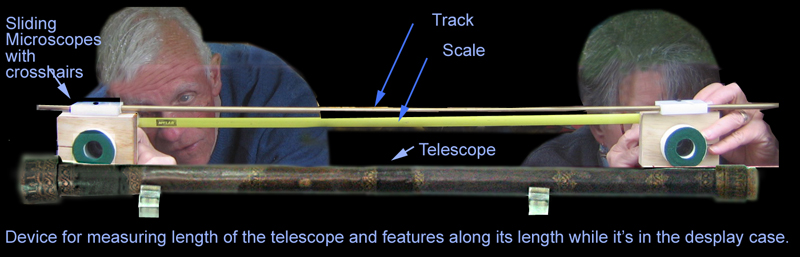


 In
the years prior to 600 people used mostly common sense to
gain an understanding of how things in nature worked.
Galileo was one of those who recognized that common sense
had a place but not in science. It was wasting time
and resources going no where like the little figure in the
animation above. Old science , on the large part, had been
on a never ending climb up stairs going around and around
without getting anywhere, just going around in square
circles.
In
the years prior to 600 people used mostly common sense to
gain an understanding of how things in nature worked.
Galileo was one of those who recognized that common sense
had a place but not in science. It was wasting time
and resources going no where like the little figure in the
animation above. Old science , on the large part, had been
on a never ending climb up stairs going around and around
without getting anywhere, just going around in square
circles.




.jpg)


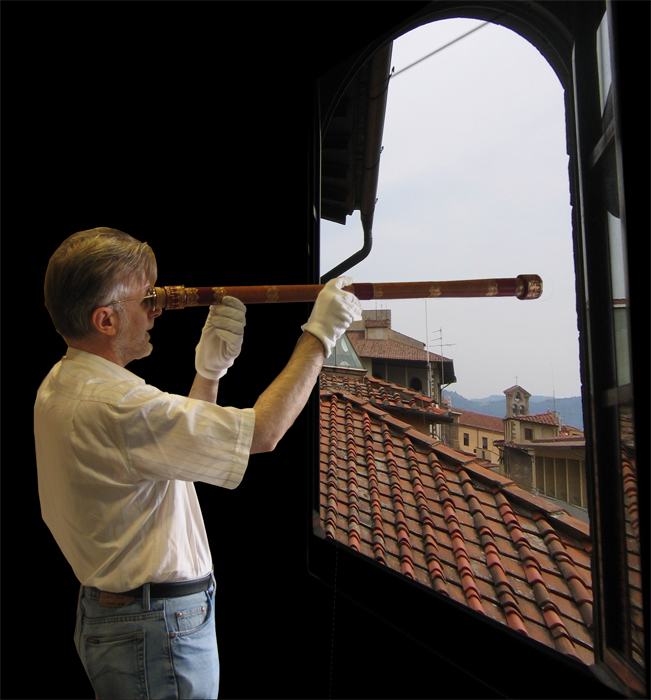


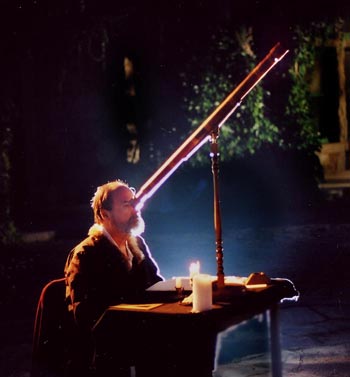
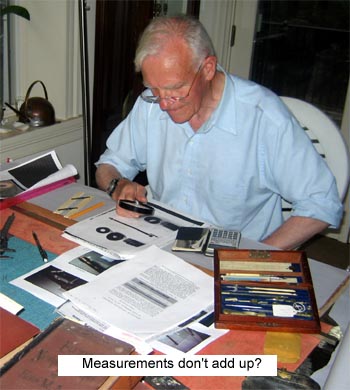
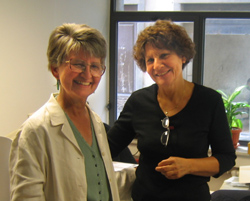

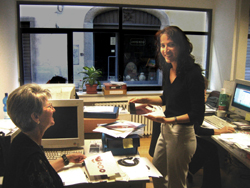
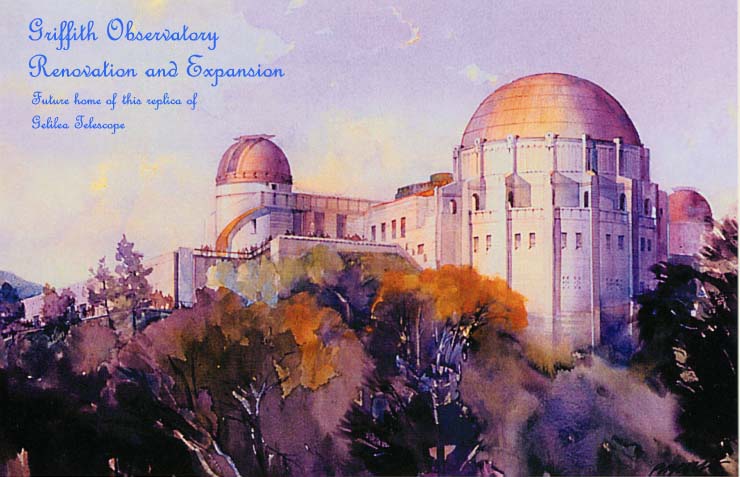

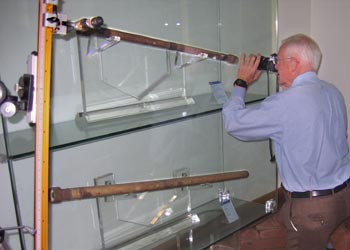

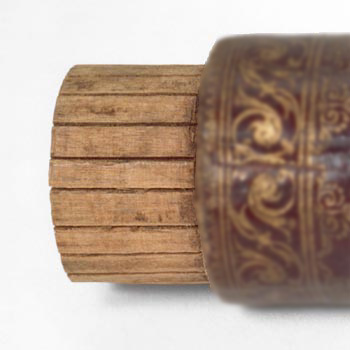


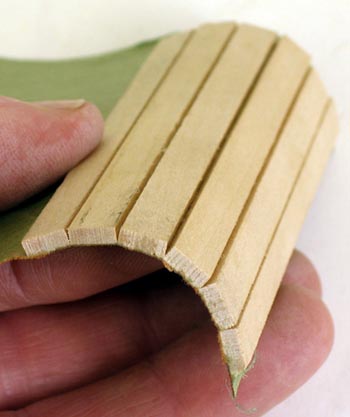
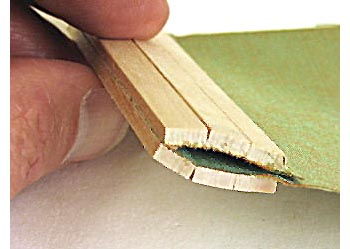
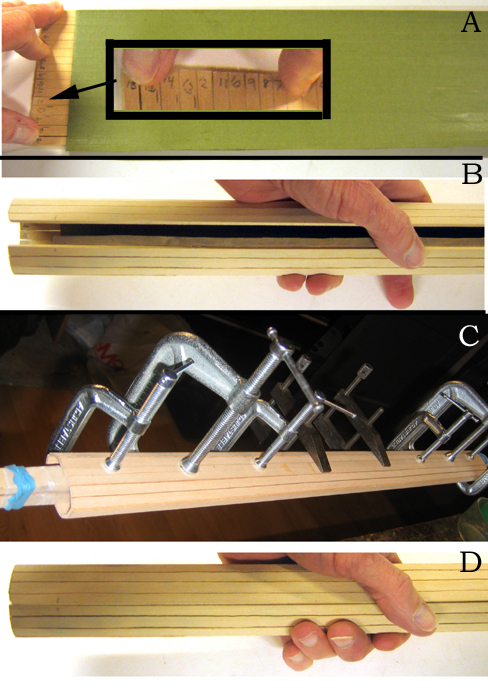
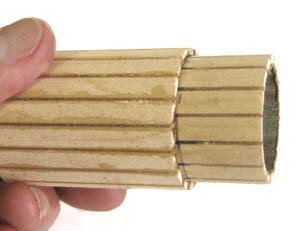

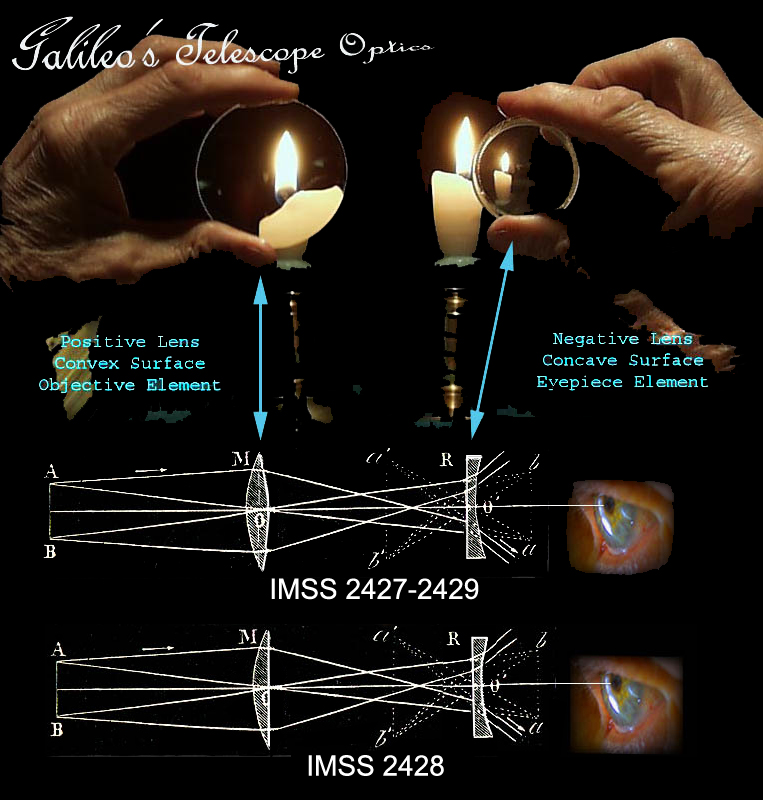
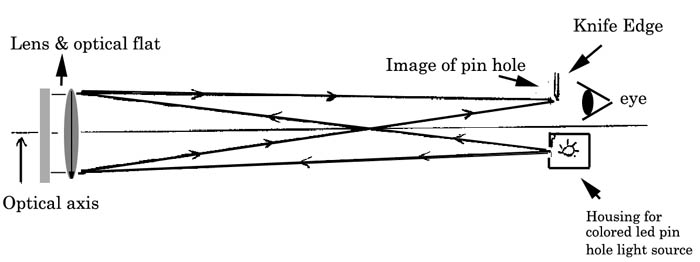

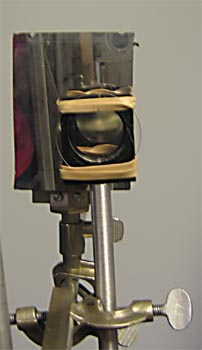
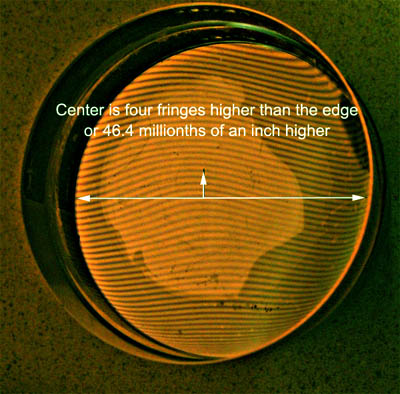
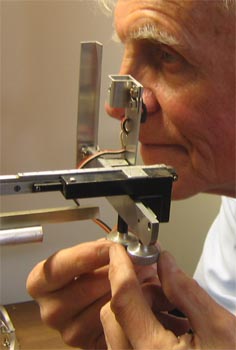
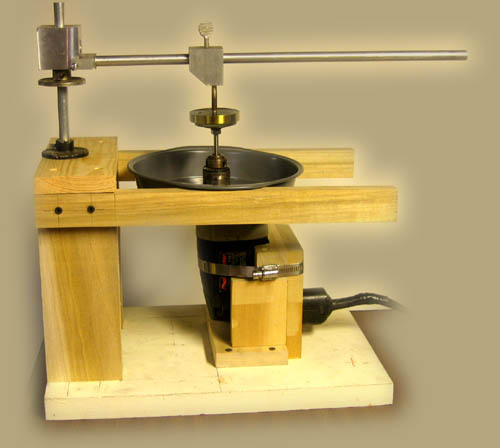



 ,
,